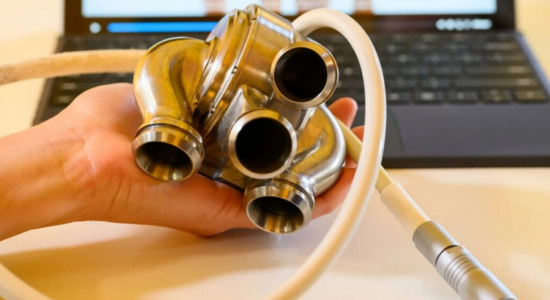

Imagine the global organ transplant waiting list—a grim, anxiety-filled reality where time is the ultimate enemy. Right now, thousands of people are stuck in hospitals waiting for a tragic accident to claim someone else’s life just so they can secure a donor match. It is a system heavily dependent on luck, timing, and a massive supply of lifelong immunosuppressant drugs. But what if the solution to a failing liver or a damaged heart wasn’t finding a donor, but simply pressing “print”?
It sounds like a plot device from a futuristic medical thriller, but this technology is already buzzing and whirring inside university laboratories right now. Scientists aren’t just printing plastic toys, car parts, or titanium joint replacements anymore; they are actively loading up printer cartridges with living human cells. This is the mind-bending reality of 3D bioprinting, a breakthrough that is fundamentally rewriting the rules of human biology and moving us closer to a world where replacing a failing body part is as routine as swapping out a flat tire.
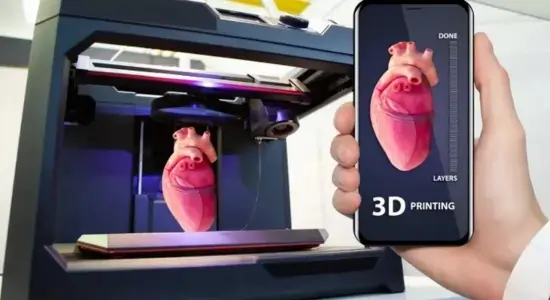
The Bio-Ink: How 3D Bioprinting Uses Living Paint
If you have ever seen a standard 3D printer, you know it works by melting hard plastic filaments and laying them down layer by layer. Obviously, you cannot blast living human cells with superheated lasers and expect them to survive. To build a living structure, engineers had to completely reinvent the “ink.”
Instead of plastic, bioprinters use something called a hydrogel. Think of this gel as a microscopic bowl of Jell-O that is packed with essential nutrients, water, and millions of living human stem cells. The printer nozzle carefully extrudes this bio-ink at room temperature, stacking the jelly-like layers on top of each other to form a 3D shape. The hydrogel acts as a temporary scaffolding, holding the delicate cells in place while they naturally multiply, communicate with one another, and eventually fuse together into solid, functional human tissue. This living paint is the foundational secret to eventually printing human organs on demand.
Solving the Biological Plumbing Problem
For a long time, scientists could successfully print small clumps of beating heart muscle in a petri dish, but they hit a massive biological wall. If you print a thick chunk of liver or heart tissue, the cells trapped right in the center will suffocate and die within minutes. Why? Because they lack a vascular system. Without tiny blood vessels to deliver oxygen and sweep away waste, complex organs simply cannot survive.
To solve this, researchers developed a brilliant workaround using “sacrificial ink.” Along with the regular stem cell bio-ink, the printer lays down a secondary ink made of something like sugar or gelatin to map out a network of veins. Once the entire organ is printed, scientists flush the structure with warm water. The sugar network simply melts and washes away, leaving behind a perfectly hollow network of tubes. Doctors can then pump nutrient-rich blood through these empty channels, keeping the dense printed tissue alive and healthy.
The End of Organ Rejection
The ultimate goal of this technology isn’t just about speed; it is about perfect biological compatibility. When a patient receives a traditional organ transplant today, their immune system immediately recognizes the new organ as a foreign invader. To prevent their body from attacking and destroying the new heart or kidney, patients have to take harsh immunosuppressant drugs for the rest of their lives, leaving them highly vulnerable to infections.
Bioprinting completely bypasses this danger. Before a medical team starts the printing process, they simply harvest a small sample of fat or skin cells directly from the patient. In the lab, these cells are biologically reverse-engineered back into base-level stem cells and loaded into the printer. Because the final printed structure is made entirely from the patient’s own DNA, their immune system recognizes it as “self.” This completely eliminates the risk of organ rejection, making printing human organs on demand the holy grail of modern surgical medicine.
Conclusion
We aren’t going to see fully functional, 3D-printed human hearts implanted into patients by next Tuesday. The human organ is an incredibly complex machine, and scaling up the vascular networks to sustain a full-sized liver or lung is still a major engineering hurdle. However, the technology is advancing at breakneck speed. Right now, scientists are already successfully printing patches of skin for burn victims, functional cartilage, and miniature “organoids” used to safely test new pharmaceutical drugs. The leap from science fiction to everyday medical reality isn’t happening overnight, but it is successfully happening layer by microscopic layer.
The Rabbit Hole Goes Deeper…
If you think that is the strangest way science is pushing the boundaries of what is possible, the world of modern bioengineering has plenty of other mind-blowing realities waiting for you.
Did you know doctors can now safely extract swallowed batteries from a patient’s stomach using a microscopic, magnetic device made from dried pig intestine? Discover the brilliant mechanics behind the swallowable origami robot surgeon.
What if the ultimate cure for a deadly, antibiotic-resistant superbug is actually another human being’s waste? Dive into the stomach-churning but miraculous science behind the life-saving fecal microbiota transplant.
Imagine fighting severe city smog with massive, glowing tanks of green slime. Uncover the bizarre biology of how cyberpunk liquid trees and urban algae air purifiers are outperforming natural forests in the concrete jungle.
References:
Nature — The Future of 3D Bioprinting in Medicine
Science Magazine — Sacrificial Ink Solves the Vascularization Problem in 3D Tissue
National Geographic — How Bioprinting is Changing the Face of Transplant Surgery