
Imagine sitting in front of a computer screen, wanting to open a web browser. But instead of reaching for a mouse, you simply think about moving your hand, and the cursor instantly glides exactly where you intended. It sounds like the plot of a cyberpunk thriller, but this is a documented medical reality happening across the globe right now. Paralyzed patients are actively playing video games, designing 3D models, and typing messages without moving a single muscle.
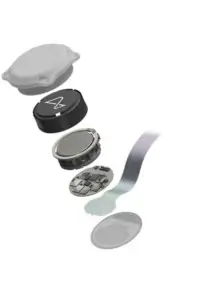
This massive leap in medical technology is being driven by a coin-sized device officially known as the N1 Implant, though it is more popularly branded as the “Telepathy” interface by its creator, Neuralink. By physically bridging the gap between human neurology and digital software, scientists have completely bypassed severed spinal cords. To understand how a piece of silicone and wire can essentially read your mind, we have to look at the microscopic, highly electrified biological machinery firing inside your skull.
The Microscopic Hardware Inside the Telepathy Chip
The human brain is essentially a massive, biological supercomputer. Every time you want to move your arm, a specific region called the motor cortex generates tiny electrical spikes, passing signals from neuron to neuron. In a patient with paralysis, these electrical commands are still firing perfectly in the brain, but the physical “cables”—the spinal cord—carrying those signals to the limbs have been permanently severed.
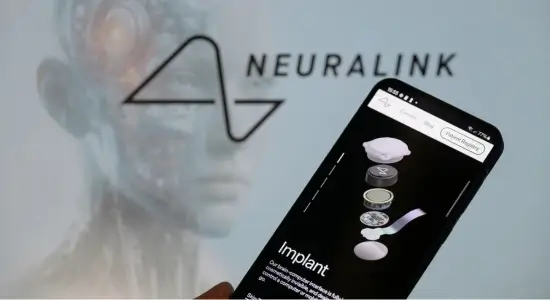
The genius of the Telepathy Chip is that it acts as a digital bypass. The main hub of the device is completely hidden beneath the scalp, sitting flush with the skull. Hanging down from this coin-sized hub are 64 flexible “threads” made of biocompatible polymers. These threads are the true heroes of the operation. They are thinner than a human hair and contain over 1,000 microscopic electrodes in total. When implanted directly into the motor cortex, these tiny sensors act like microscopic microphones, “listening” to the crackle of electrical spikes generated by your neurons the exact moment you think about moving.
Sewing Electronic Roots With a Robotic Surgeon
Of course, you cannot simply push a thousand microscopic wires into a human brain by hand. The brain’s surface is incredibly squishy, delicate, and covered in a dense, complex web of blood vessels. If a human surgeon’s hand trembled even a fraction of a millimeter, it could cause catastrophic bleeding.
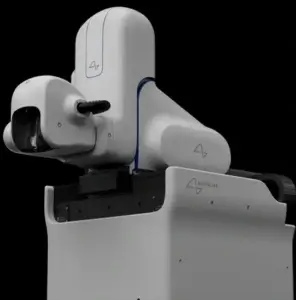
To solve this, researchers had to build an entirely separate piece of technology: the R1 surgical robot. Imagine a highly advanced sewing machine combined with an ultra-high-definition microscope. This robot dynamically maps the surface of the patient’s brain in real-time, calculating the exact trajectory needed to dodge every single blood vessel. It then uses a needle as thin as a red blood cell to rapidly “sew” the flexible electrode threads directly into the cerebral cortex. The precision is so extreme that the entire thread insertion process takes just minutes, minimizing tissue damage and ensuring the highest possible signal quality.

Decoding Brainwaves into Digital Clicks
Once the threads are secured, the biological data has to be translated. The implant takes the raw electrical static of your neurons firing, digitizes it, and wirelessly transmits that data via Bluetooth to an external app. This is where the reality of controlling computers with thoughts actually happens. Custom machine-learning algorithms analyze the chaotic electrical spikes and identify the specific patterns associated with the intent to move up, down, left, or right.
It is surprisingly intuitive for the user. Initially, a patient might try to physically force their paralyzed hand to move the mouse. The algorithm watches and learns what that specific “movement intent” looks like electronically. Within hours, the patient’s brain realizes it doesn’t need to attempt the physical movement anymore; it just needs to generate the intent. It is a seamless fusion of biology and software, allowing for controlling computers with thoughts at speeds that rival able-bodied users operating a physical mouse. In recent clinical trials, participants have even started using this same decoding technology to effortlessly operate physical robotic arms to feed themselves.
Conclusion
The rise of the neural interface forces us to rethink the very boundaries of the human body. This technology isn’t “mind reading” in the sci-fi sense—it cannot download your memories or broadcast your secret thoughts to the internet. Instead, it is a highly sophisticated translation tool, turning the mechanical intent of a trapped mind into actionable digital commands. By proving that our thoughts can physically interact with the digital world, we aren’t just curing paralysis; we are taking the first tangible steps into a new era of human-machine symbiosis.
The Rabbit Hole Goes Deeper…
If you think that is the strangest way science is solving complex problems, the world of bioengineering has plenty of other mind-blowing hacks waiting for you.
Did you know doctors are actually prescribing a “poop pill” to pull patients back from the brink of death? Dive into the stomach-churning but miraculous science behind the life-saving fecal microbiota transplant.
What if we could clean heavily polluted city air with glowing green slime? Discover how cyberpunk liquid trees and urban algae air purifiers are outperforming natural forests in the concrete jungle.
Imagine bypassing bulky hospital machines with a simple sticker on your chest. Explore the bizarre engineering behind the wearable stamp-sized ultrasound patch that streams live video of your internal organs directly to your phone.
References:
Scientific American — Brain-Computer Interfaces Translate Thoughts into Action
MIT Technology Review — How Neuralink’s Robot Surgeon Sews Threads into the Brain
Wired — The Reality of Neuralink’s Telepathy Implant