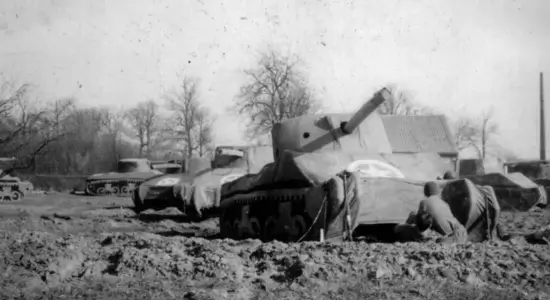

Picture being a German soldier stationed on the Eastern Front during the freezing winter of 1942. You’re huddled in a dark trench, desperately trying to catch a few hours of sleep. Suddenly, you hear a strange, soft whooshing noise just above your head. It sounds exactly like a witch’s broom sweeping across the sky. There’s no loud engine roar, no warning sirens. Seconds later, a string of bombs erupts across your camp, blowing supply dumps to pieces. By the time the anti-aircraft guns are aimed, the attackers have completely vanished back into the pitch-black sky.
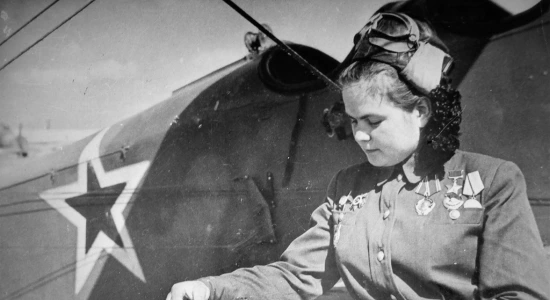
The Nazis were so rattled by these phantom attackers that wild rumors started spreading through the German ranks. They seriously believed the Soviet pilots were being injected with experimental pills that gave them cat-like night vision. The threat was so severe that any German pilot who managed to shoot one of these planes down was automatically awarded the prestigious Iron Cross. But the truth was far more embarrassing for the Third Reich. These weren’t genetically modified super-soldiers. They were a group of women in their late teens and early twenties, flying obsolete, open-cockpit crop-dusters. They were the 588th Night Bomber Regiment, and they earned a legendary nickname from the very soldiers they terrorized.
Why The Night Witches Flew Plywood Crop-Dusters
When the Soviet Union finally allowed women to fly combat missions, the military didn’t exactly hand over their top-tier equipment. The 588th was given the Polikarpov Po-2, an outdated biplane made almost entirely of wood and canvas. Before the war, these planes were primarily used for training rookies and dusting crops. They had no radio, no radar, no armor, and a top speed of barely 94 miles per hour.

But here’s where the mechanical physics get genuinely funny. That painfully slow speed actually became their greatest tactical advantage. The standard German fighter plane, the Messerschmitt Bf 109, had a “stall speed” that was faster than the Po-2’s absolute maximum speed. This meant that if a German pilot tried to slow down enough to line up a clean shot at one of the wooden biplanes, his engine would literally stall out, and his plane would drop from the sky. On top of that, because the Soviet planes were essentially just flying canvas tents, they barely registered on early German radar systems.
The Insane Physics of the “Idle-Glide” Bombing
To actually hit their targets without modern crosshairs or targeting computers, this all-female Soviet bomber regiment had to fly incredibly low to the ground. The problem was that the Po-2’s engine was loud and had a nasty habit of shooting bright sparks out of the exhaust, which would instantly give away their position in the dark.
So, the pilots developed an incredibly dangerous, nerve-wracking tactic. As they approached a Nazi encampment, they would simply cut the engine completely. They would glide in total silence through the night sky. The only noise was the wind ripping across the canvas wings—producing that famous “sweeping broom” sound. They would manually drop their bombs over the side of the plane, flip the engine back on in mid-air, and gun it back to base before the Germans even figured out what hit them.
Fighting the Elements Without Parachutes
The stealth tactics were brilliant, but the physical toll on the pilots was extreme. Because the tiny planes could only carry two bombs at a time, the all-female Soviet bomber regiment had to run a massive volume of flights to make any real impact. A single crew would fly up to 18 missions in one night. They would land, the mechanics (who were also all women) would rearm and refuel the plane in minutes, and they would take right back off.
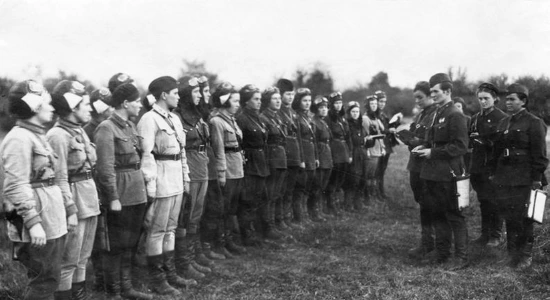
Worse still, the planes had open cockpits. The women flew through brutal Russian winters where temperatures dropped so low that touching the plane with bare skin would tear their flesh right off. And until 1944, they didn’t even carry parachutes. The logic was grim but practical: parachutes were heavy, and leaving them behind meant they could carry an extra bomb. If their highly flammable canvas planes were hit by tracer bullets, they went up in flames like dry kindling.
Conclusion
Despite facing intense sexism from their own male counterparts—who initially refused to take them seriously and forced them to wear oversized men’s boots—the 588th Night Bomber Regiment became one of the most decorated units in the Soviet Air Force. They flew over 30,000 missions and dropped 23,000 tons of bombs on the invading German army. The story of The Night Witches proves that you don’t always need the most advanced technology or the thickest armor to dominate a battlefield. Sometimes, all you need is a wooden crop-duster, total darkness, and nerves of absolute steel.
The Rabbit Hole Goes Deeper…
If the story of women using obsolete crop-dusters to completely outsmart the Nazi war machine blew your mind, history is packed with other unconventional (and totally bizarre) tactical masterclasses.
-
Think the Night Witches were the only all-female crew to completely outmaneuver a male-dominated system? Step into 1920s London to discover how a glamorous, ruthless crime syndicate baffled Scotland Yard in the genius tactics behind the Forty Elephants.
-
Or maybe you want another story about a highly trained military getting completely humiliated by an unexpected enemy. Swap the Eastern Front for the Australian outback and discover the bizarre reason the military lost the Great Emu War.
Keep exploring the Weird History archives on FactFun… because human ingenuity (and occasional sheer stupidity) knows no bounds.
References:
The Washington Post — The Night Witches: The All-Female WWII Aviators
History.com — Meet the Night Witches, the Daring Female Pilots of WWII The Atlantic —
The Soviet Female Aviators Who Terrorized the Nazis