
Imagine a marine predator the size of a manhole cover, armed with 24 limbs, up to 15,000 tube feet, and capable of sprinting across the ocean floor at the astonishing speed of one meter per minute. For decades, the sunflower sea star (Pycnopodia helianthoides) reigned supreme along the North American Pacific coast as the ultimate apex invertebrate. They were the biological vacuum cleaners of the ocean, aggressively hunting down purple sea urchins and swallowing them whole. As long as these massive stars patrolled the reefs, the towering, underwater bull kelp forests of California remained balanced, healthy, and completely safe from overgrazing.
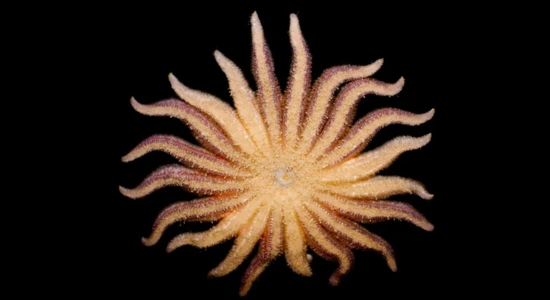
Then, beginning in 2013, they simply melted away. A mysterious, ocean-spanning plague known as Sea Star Wasting Syndrome, supercharged by a massive marine heatwave, wiped out an estimated 5.7 billion sunflower stars. Off the coast of California, they were considered functionally extinct. Searching for a surviving adult in these waters quickly became the marine biology equivalent of cryptozoology, earning the elusive creature a new nickname. But recently, researchers have confirmed that the “Sasquatch of the Sea” is still out there, hiding in deep-water refuges, and this surviving population might be the key to resurrecting a completely devastated ecosystem.
The 2013 Meltdown and the Rise of the Urchin Barren
To understand why finding a single sea star is such a massive deal, you have to look at the mechanical failure of the California coastline over the last decade. When the wasting disease eradicated the sunflower sea stars, the purple sea urchins lost their primary predator. Without the stars to keep them in check, the urchin population exploded by a factor of 10,000.
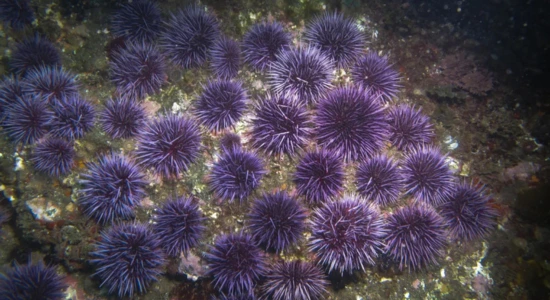
These starving, unchecked urchins swarmed the ocean floor like a plague of locusts. In Northern California, specifically along the coasts of Sonoma and Mendocino counties, these spiky herbivores devoured 95% of the historic bull kelp forests. What used to be a vibrant, three-dimensional environment supporting hundreds of species was instantly reduced to an “urchin barren”—a desolate, underwater desert paved entirely with starving sea urchins. Because these urchins can enter a dormant state and survive for years without food, the kelp forests had absolutely no chance of recovering naturally without their native predator returning to clear the ocean floor.
Uncovering the “Sasquatch Of The Sea” in the Deep
For years, marine ecologists assumed the California population of sunflower stars was permanently gone. However, massive collaborative efforts by researchers, including Dr. Sarah Gravem from Oregon State University and the Nature Conservancy, began looking beyond the shallow, coastal dive sites. By utilizing deep-water trawls and Remotely Operated Vehicles (ROVs), scientists realized the stars hadn’t completely vanished; they had retreated.
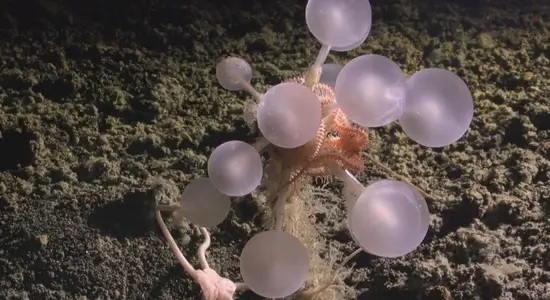
In the cooler, deeper channels off the coast, where water temperatures were stable enough to stave off the wasting disease, researchers managed to locate isolated survivors. Discovering a hidden sunflower sea star lair in these deep-water canyons completely changed the conservation narrative. Finding these adult survivors proved that the species still possessed the genetic resilience to survive in California waters. They are currently clinging to existence in the dark, waiting for the coastal temperatures to stabilize so they can creep back into the shallows.
Engineering a Biological Comeback
While finding wild survivors in a hidden sunflower sea star lair is a massive morale boost, researchers are not leaving the kelp forest’s recovery to chance. Up the coast at the University of Washington’s Friday Harbor Laboratories, marine biologist Jason Hodin and his team have achieved the impossible: successfully breeding sunflower sea stars in captivity.
Starting with a small batch of wild adults gathered from the Pacific Northwest, Hodin’s lab has managed to raise thousands of microscopic larvae into fully formed, urchin-eating juveniles. The ultimate goal is to essentially reverse-engineer the kelp forest ecosystem. By taking the resilient genetics from wild survivors and combining them with the massive numbers produced by the captive breeding program, scientists hope to physically parachute an army of lab-grown apex predators back into the California urchin barrens.
Conclusion
The sudden disappearance of the sunflower sea star was a terrifying lesson in how quickly an entire ecosystem can collapse when you remove a single, load-bearing species. However, the discovery of deep-water survivors proves that the ocean is incredibly resilient. The “Sasquatch of the Sea” is no longer a ghost story told by frustrated marine biologists; it is a living, breathing conservation target. As scientists continue to breed these massive stars and protect their deep-water refuges, there is genuine, factual hope that California’s legendary kelp forests will rise from the barrens once again.
References
Smithsonian Magazine — Why the ‘Sasquatch of the Sea’ Might Be the Key to Saving Kelp Forests National Geographic — A devastating disease wiped out this sea star. Now it’s making a comeback. Frontiers in Marine Science — Sea Star Wasting Syndrome and the Collapse of the Sunflower Sea Star