
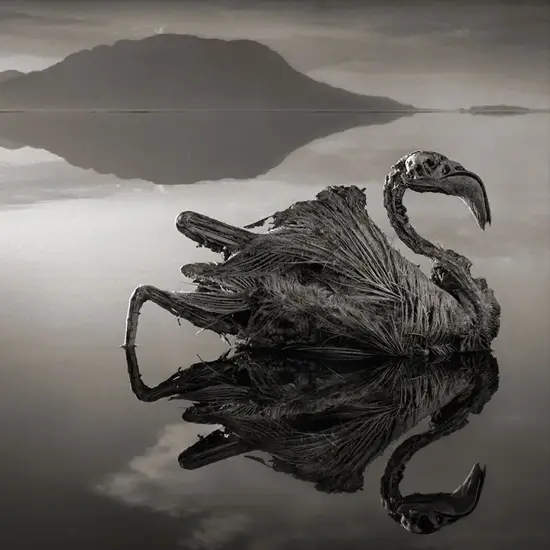
If you spend enough time scrolling through nature photography, you have likely encountered the viral, haunting images of calcified birds and bats poised like statues on the shores of an African lake. Captured in 2010 by wildlife photographer Nick Brandt and published in his 2013 book Across the Ravaged Land, these black-and-white portraits look like they belong in a dark fantasy novel. The creatures appear to have been instantly petrified mid-flight, cursed by a mythological Medusa and left to rot as solid stone on the edge of the water.
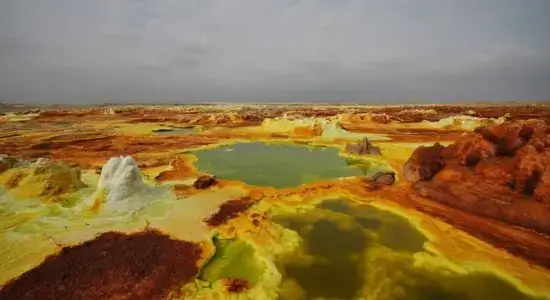
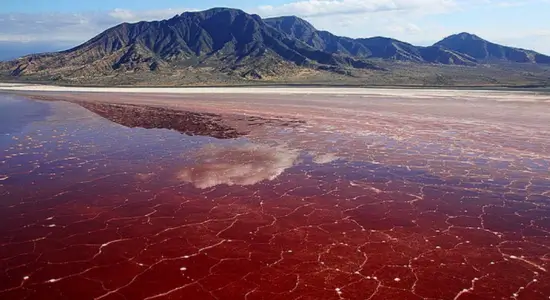
However, the Earth doesn’t deal in magic curses; it deals in extreme chemistry. Tucked away in the Gregory Rift of northern Tanzania, near the Kenyan border, Lake Natron is one of the most hostile and chemically aggressive bodies of water on the planet. Its waters are dyed a deep, bloody red, its temperatures can soar to a blistering 140°F (60°C), and its alkalinity is so high it can strip the ink off a printed photograph in seconds. But the biological reality of this alien environment is far stranger than the internet legends suggest.
The Extreme Chemistry Of Lake Natron
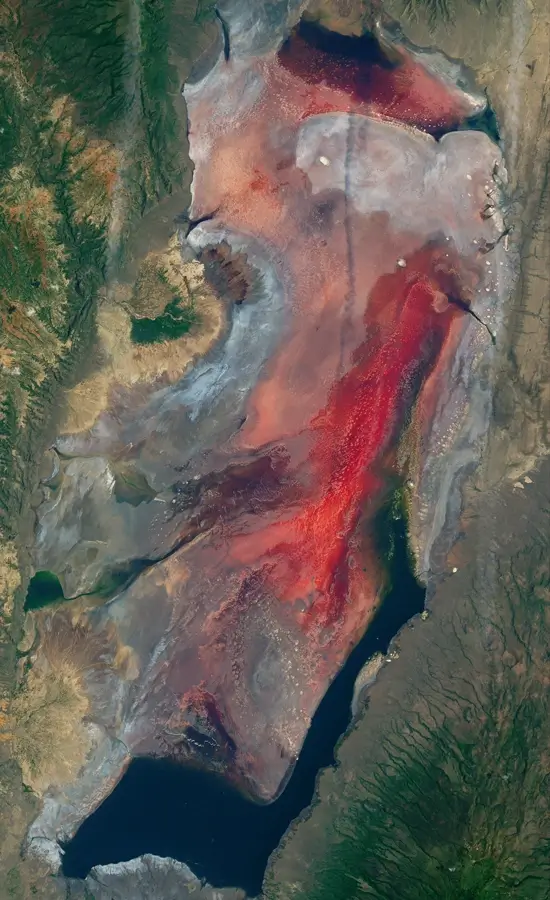
To understand what makes this water so dangerous, we have to look at the surrounding geology. Lake Natron sits in the shadow of Ol Doinyo Lengai, a massive, active volcano that erupts a highly unusual type of magma called natrocarbonatite. Over thousands of years, volcanic ash from Ol Doinyo Lengai has washed down into the lake basin. Because Lake Natron is a terminal lake—meaning water flows into it but has no river outlet to escape—the only way water leaves is through evaporation under the brutal East African sun.
As the water evaporates, it leaves behind an incredibly concentrated, caustic soup of minerals. The dominant compound left behind is sodium carbonate decahydrate, historically known as “natron.” If that name sounds familiar, it’s because it is the exact same chemical compound the ancient Egyptians used to dry out and preserve the bodies of their pharaohs during the mummification process. This massive influx of volcanic salts pushes the lake’s pH level up to a staggering 10.5 or even 12, making it nearly as alkaline as commercial ammonia.
How The Mummification Trap Actually Works
So, what happens when an animal interacts with this caustic soup? The surface of the lake is highly reflective, acting like a giant, glassy mirror. Scientists believe that migrating birds and bats often get confused by the reflection and accidentally dive-bomb straight into the hyper-saline water. The water doesn’t magically freeze them into stone on contact. Instead, they drown, and then the extreme chemistry takes over.
The high concentration of sodium carbonate acts as the ultimate preservative. It rapidly draws the moisture out of the animal’s flesh, completely halting the biological decomposition process. As the water level drops during the dry season, the perfectly mummified carcasses are left behind on the shoreline, coated in a thick, crusty layer of chalky salt. When Nick Brandt discovered these mummified remains, he physically picked them up and posed them on branches for his artistic photo series. While this created striking art, it accidentally fueled the myth of the lake that turns animals to stone. In reality, these creatures are essentially naturally occurring Egyptian mummies.
A Thriving, Caustic Oasis For Millions Of Flamingos
Perhaps the most mind-blowing fact about Lake Natron isn’t death, but life. Despite its terrifying reputation as a lake that turns animals to stone under the right conditions, it is actually one of the most vital biological nurseries on the African continent. The extreme alkalinity is completely fatal to most predators, creating a massive, perfectly protected moat.
This makes it the ultimate safe haven for the Lesser Flamingo. Every year, up to 2.5 million of these birds—nearly 75 percent of the global population—descend on Lake Natron to breed. They build their nests on the exposed salt islands, perfectly safe from hyenas and baboons who cannot cross the caustic water. The flamingos thrive here because they have evolved tough, leathery skin on their legs to withstand the alkaline burns, and they feed exclusively on Arthrospira fusiformis, a specialized cyanobacteria that survives in the extreme salt and gives the lake its famous, vibrant red color.
Conclusion
Lake Natron is a brilliant reminder of how incredibly adaptable life on Earth can be. What looks like a barren, toxic wasteland filled with petrified corpses is actually a dynamic ecosystem operating in extreme balance. The intense volcanic geology that creates a perfect mummification trap for unadapted species is the exact same mechanism that protects the survival of millions of flamingos. It isn’t a cursed body of water out of Greek mythology; it is a marvel of chemistry, thermodynamics, and evolutionary biology.
Nature is the ultimate mad scientist. The mummifying waters of Lake Natron prove that our planet is capable of some truly bizarre, extreme chemistry. If you love discovering how alien our own world can be, your expedition doesn’t have to end here. Dive into our archives to explore more mind-bending science, extreme ecosystems, and weird nature facts that will completely change how you look at the wild.
References:
Smithsonian Magazine — The Deadly Lake Where 75 Percent of the World’s Lesser Flamingos Are Born
National Geographic — Any animal that touches this deadly lake turns to stone? Not quite.
Live Science — The Truth Behind Africa’s ‘Medusa’ Lake