

On March 20, 1966, the English Football Association faced a level of national embarrassment that is hard to wrap your head around today. Just four months before England was scheduled to host the FIFA World Cup, the tournament’s ultimate prize—the solid gold Jules Rimet Trophy—was brazenly stolen. It had been on public display alongside a rare stamp exhibition at Westminster Central Hall in London, supposedly under constant guard. Yet, during a Sunday church service in another part of the building, thieves bypassed the security detail, unscrewed the display cabinet, and vanished with the 14-inch, octagonal gold cup.
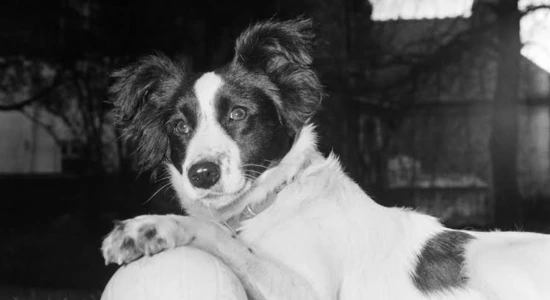
The theft triggered one of the largest dragnets in the history of Scotland Yard. Detectives scrambled to track down a mysterious ransom demand from a man calling himself “Jackson,” who demanded £15,000 for the trophy’s safe return. A botched sting operation led to Jackson’s arrest, but the trophy itself remained entirely missing. The British government was in a state of absolute panic, secretly commissioning a replica to avoid global humiliation. However, the international crisis wasn’t averted by highly trained investigators or elite intelligence agents. It was solved entirely by a four-year-old black-and-white collie mix out for a Sunday stroll.
The Reality Of A Disastrous Heist
To understand how desperate the situation was, you have to look at the mechanics of the extortion plot. The man arrested during the police sting was Edward Betchley, a former soldier and petty thief. Betchley claimed he was merely a middleman paid £15 to execute the drop-off and staunchly refused to give up the location of the cup or the identity of the mastermind.
With their only suspect uncooperative and the tournament clock ticking down, investigators hit a dead end. The stolen 1966 World Cup trophy was not just a piece of sports memorabilia; it was a heavily insured, globally recognized cultural artifact. Law enforcement aggressively scoured London, assuming the gold had either been melted down into untraceable bullion or smuggled out of the country to a private buyer. They were looking in the criminal underworld, but the prize was actually sitting in a residential gutter.
How Pickles the Dog Sniffed Out The Missing Gold
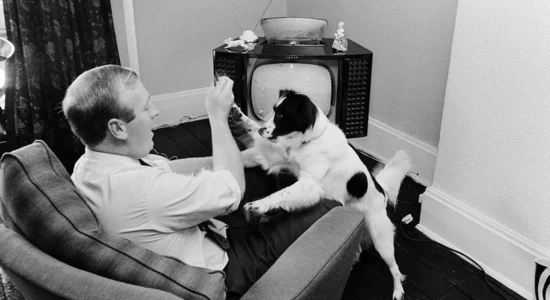
Exactly one week after the heist, on March 27, 1966, a 26-year-old Thames lighterman named David Corbett walked out of his home on Beulah Hill in Upper Norwood, South London. He was simply taking his dog, Pickles, to a local telephone box to call his brother. As they walked, Pickles immediately darted toward a neighbor’s car and began frantically sniffing at a tight, heavy package shoved beneath the front tire.
Curious, Corbett pulled the parcel out of the bushes. It was tightly wrapped in old newspaper and tied with string. Fearing it might be an IRA explosive device—a legitimate and terrifying concern in 1960s London—he carefully peeled back the damp paper. Instead of wires, he found a woman’s figure holding a shallow dish: the unmistakable shape of the Jules Rimet Trophy. The stolen 1966 World Cup trophy had simply been tossed under a hedge, and a curious local pet had just cracked Scotland Yard’s biggest open case.
The Biological Advantage of a Canine Detective
How did Pickles find something that the entirety of the London police force missed? It comes down to evolutionary biology. Humans rely heavily on visual processing to navigate the world. To a human walking past that car, the newspaper-wrapped bundle was practically invisible, blending in perfectly with ordinary street litter. But a dog lives in a rich, three-dimensional world of scent.
A dog’s nose possesses up to 300 million olfactory receptors, compared to a human’s measly six million. Furthermore, the part of a dog’s brain dedicated to analyzing smells is proportionally 40 times greater than ours. When Pickles walked past that car, he didn’t just “see” trash; he smelled the metallic tang of gold, the specific chemical degradation of damp newsprint, and the lingering sweat of the desperate thieves who had handled it days earlier. To his biological hardware, that package might as well have been a flashing neon sign.
Conclusion
The recovery of the Jules Rimet Trophy is a brilliant reminder that history often hinges on total accidents. Thanks to Pickles, England was spared immense global embarrassment, and team captain Bobby Moore was able to hoist the genuine trophy when England won the final that July. Pickles became an instant international celebrity, earning a medal, a year’s supply of free dog food, and an invitation to the team’s celebration banquet. While the true mastermind behind the heist remains officially unknown to this day, the legacy of the event belongs entirely to a good boy with an evolutionary edge and a nose for justice.
The World Cup is full of bizarre historical anomalies. If you thought a dog finding a stolen gold trophy in a bush was wild, wait until you uncover the medical mystery that shook the tournament decades later. Fast forward to France, where the world’s greatest striker suffered a catastrophic physical breakdown just hours before the biggest match of his life. Discover the shocking biological truth behind Ronaldo’s mysterious 1998 World Cup collapse.
References
BBC News — How Pickles the dog dug up the accursed World Cup
The Guardian — A history of the World Cup in 24 objects: Pickles the dog
Time Magazine — The Dog Who Saved the World Cup