
For decades, the story of the high Pyrenees was written by people who never actually lived there: ecologists, hikers, park rangers, all treating the peaks above 2,000 meters as empty wilderness humans merely passed through on their way to somewhere else. A radiocarbon database twenty years in the making just tore that story apart. People weren’t passing through. They kept coming back, to the exact same rock shelters, for over 10,000 years.
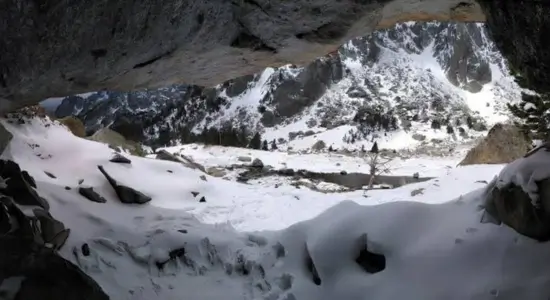 The high Pyrenees, once assumed to be empty wilderness, now show evidence of repeated human settlement stretching back 10,000 years.
 Table of Contents
Twenty Years, 380 Sites, One Database
Since 2004, a research team from the Universitat Autònoma de Barcelona, led by archaeologist Ermengol Gassiot, has been climbing into one of the harshest corners of Spain’s Aigüestortes i Estany de Sant Maurici National Park and refusing to accept the obvious explanation. Nearly 40,000 hectares of granite peaks, and buried across them: roughly 380 archaeological sites. Huts. Stone enclosures. Rock shelters. Charcoal kilns. Places that, on paper, should have been too cold, too high, and too hostile to bother with.
The team’s newly published dataset, appearing in ArcheoLogica Data, compiles 124 radiocarbon dates pulled from 45 of those sites. It’s being called the first fully open, systematic series of absolute dates ever produced for a high-mountain zone of the Pyrenees, meaning every lab result, every sample, every line of the analysis is sitting online for anyone to check. No black box. No trust us.
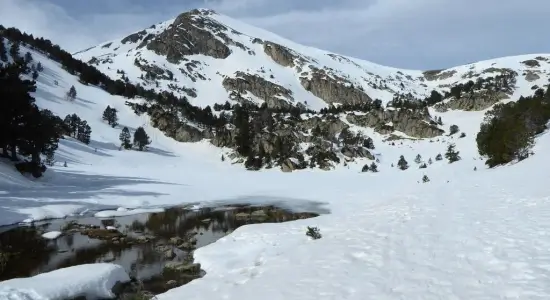 Rock shelters above 2,000 meters show occupation layers spanning nearly every era of prehistory.
The Three Shelters That Refused to Be Abandoned
Three sites in particular carry sequences so long they’re almost hard to believe. Obagues de Ratera, a rock shelter sitting at 2,320 meters, holds the oldest evidence: first occupied somewhere between 8092 and 7660 BCE, roughly 10,000 years ago. Its layers don’t stop there. They run straight through the Mesolithic, into the Neolithic, through the Chalcolithic and the Bronze Age, into the early Iron Age, past the Visigothic period, and all the way up to the 19th and 20th centuries. That’s not a settlement. That’s practically a subscription.
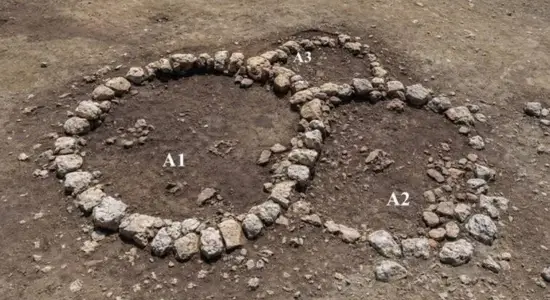
Cova del Sardo, at 1,780 meters, goes back about 7,500 years. Portarró, at 2,280 meters, reaches roughly 7,300 years, and it comes with a bonus: dry-stone-and-timber footings built around 5,000 years ago, currently the oldest known piece of stone architecture anywhere in the Pyrenees.
None of these were villages in the permanent, year-round sense. What the radiocarbon dates actually capture is something closer to a habit. Groups showed up, used a shelter for a season or a specific job, left, and then, sometimes centuries later, entirely different people climbed back to that same overhang and built directly on top of what the last visitors had left. Multiply that pattern across an entire national park, and “continuous occupation” starts to look less like a fluke and more like a strategy.
Fun Fact
One sample from beneath a 1,843-meter burial mound dated to nearly 11,000 years ago, older than any confirmed site in the study. Researchers left it out of their main analysis anyway. The dig context was too messy to trust, and apparently even ten-millennia-old bragging rights aren’t worth publishing shaky data.
A 5,300-Year-Old Coincidence Nobody Can Explain
Run the statistics on all 124 dates and mountain activity doesn’t look steady. It comes in bursts. One of the sharpest spikes lands between roughly 3300 and 2500 BCE, right at the tail end of the Neolithic, centered around 5,300 years ago.
That number should sound familiar. It’s almost exactly when Ötzi, the famous Tyrolean Iceman, died alone on a mountain pass hundreds of kilometers away in the Ötztal Alps. And the Pyrenees weren’t the only range that got busier around then either. Other high-altitude regions across Europe show the same uptick in activity during the same centuries. Researchers are careful not to call it cause and effect. But something, somewhere, was pulling entire populations of prehistoric Europeans uphill at the exact same moment, and right now nobody can say what.
 Ötzi the Iceman died around 5,300 years ago, the same window when Pyrenees mountain activity spiked.
The Pyrenees database isn’t the only find quietly demolishing what we thought we knew about the deep past. In southeastern Türkiye, Şika Rika 5 shows people living in permanent settlements up to 2,000 years before agriculture existed in the region, flipping the usual farming-first story on its head.
A similar pattern shows up at the Sinai Rock Shelter, another 10,000-year-old site where the evidence suggests early humans were doing far more than just surviving in a supposedly marginal landscape.
What This Breaks About How We Think of Mountains
For most of modern archaeology, high altitude has been treated as the leftovers of human geography: a wartime hideout, a summer hunting stop, somewhere you endure rather than choose. The Pyrenees dataset argues the opposite. Humans didn’t just tolerate these peaks. They kept returning to them, generation after generation, for ten thousand years, adapting to the cold and the thin air instead of retreating from it.
Gassiot’s team suspects this pattern isn’t unique to Spain. As other mountain ranges get the same open, systematic radiocarbon treatment, researchers expect to find the same story repeating: deep, deliberate, repeated high-altitude occupation, hiding in plain sight under a label that never fit. “Untouched wilderness” might be one of archaeology’s longest-running myths, and the Pyrenees just handed it a 10,000-year eviction notice.
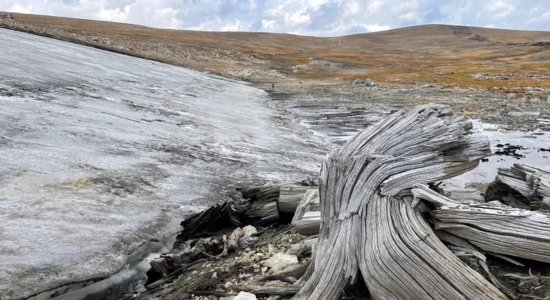
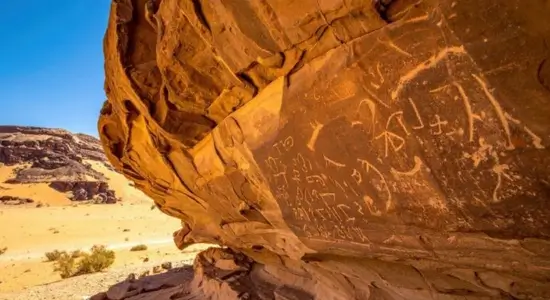
This is one of five discoveries featured in 10,000-Year-Old Discoveries That Rewrote History in 2026, covering finds from Egypt, Siberia, the Pyrenees, and the melting ice near Yellowstone.
Universitat Autònoma de Barcelona — High Mountain Archaeology Group (GAAM)
Aigüestortes i Estany de Sant Maurici National Park Archaeological Survey, 2004–2026
What did researchers discover in the Pyrenees
Researchers from the Universitat Autònoma de Barcelona compiled a radiocarbon database showing humans repeatedly occupied sites above 2,000 meters in the Spanish Pyrenees for more than 10,000 years, far longer and more consistently than previously assumed.
What is the oldest site in the Pyrenees settlement study
Obagues de Ratera, a rock shelter at 2,320 meters, holds the oldest confirmed evidence, with occupation dating back to between 8092 and 7660 BCE, roughly 10,000 years ago, and continuing in waves through nearly every subsequent prehistoric and historic period.
How does this relate to Ötzi the Iceman
One of the busiest periods of Pyrenees mountain activity, around 5,300 years ago, coincides almost exactly with when Ötzi died in the Ötztal Alps. Other European high-altitude regions show a similar spike at the same time, though researchers haven’t confirmed a shared cause.
Were these Pyrenees sites permanent settlements
Not in the traditional sense. The evidence points to repeated seasonal or task-specific use of the same shelters across centuries and millennia, rather than continuous year-round habitation, though the cumulative pattern still spans 10,000 years.