
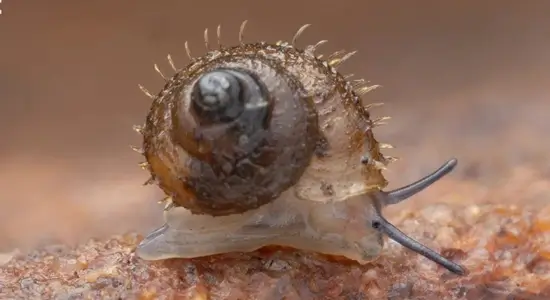
Imagine hiking through a lush, misty forest, and there, hiding amongst the damp leaves, you spot something straight out of a whimsical animated film. It’s a tiny, brown snail, but its shell isn’t smooth—it’s covered in fine, golden hairs!
This isn’t a fantasy creature; it’s a brand-new species of land snail recently discovered in India. And in a heartwarming nod to the magic of nature and cinema, researchers have given it a name that’s music to any animation lover’s ears: Lagocheilus hayaomiyazakii.
Commonly known as the Tilari Hairy Snail, this little hero has instantly become a symbol of the incredible, often-overlooked biodiversity of our planet, reminding us that even the most familiar corners of the forest can hide magnificent secrets.
The Discovery: Unveiling a Western Ghats Wonder
The story begins in the Northern Western Ghats of Maharashtra, India—specifically, at Ratoba Point, Tilari Nagar, in the Kolhapur District near the Goa border. This region is recognized globally as a biodiversity hotspot, yet vast tracts remain poorly explored by scientists.
A team of researchers from the Thackeray Wildlife Foundation, led by Amrut Bhosale alongside Tejas Thackeray, Dr. Dinarzarde Raheem of Rajarata University in Sri Lanka, and colleagues Pawar and Khandekar, ventured into this humid environment and stumbled upon these unusual molluscs. After detailed morphological and taxonomic analysis, they confirmed they had found not just a rare snail, but an entirely new species to science. Their findings were officially described and published in the highly respected Journal of Conchology of the Conchological Society of Great Britain and Ireland on October 14, 2025.
What Makes This Snail So Unique?
- Size: This snail is truly small, measuring only about 5 millimeters across—roughly the size of a peppercorn.
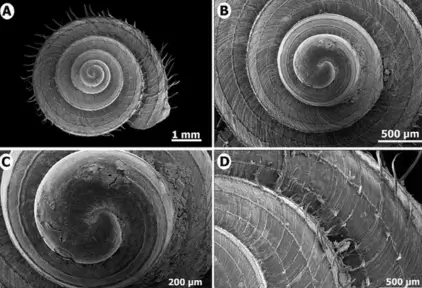
- The Hairs: The most striking feature is the presence of thick, hair-like bristles arranged in spiral rows around the shells of juveniles and young adults. This adaptation is rare and fascinating among land snails.
- Distinct Anatomy: Crucially, the researchers noted that L. hayaomiyazakii can be easily distinguished from its relatives in the Lagocheilus genus by its aperture shape (the opening of the shell), which has a pointed apex, unlike the rounded opening seen in other known species. This precise anatomical detail was key to confirming it as a genuinely new species rather than a regional variant.
Why Miyazaki? Honouring the Harmony of Nature
The moment the scientific name, hayaomiyazakii, was announced, it captured the imagination of people worldwide. It’s a Latinized patronym honouring Hayao Miyazaki (b. 1941), the celebrated Japanese animator, filmmaker, and co-founder of Studio Ghibli.
But why connect a tiny Indian snail to a Japanese animation legend?
The scientists’ dedication wasn’t random; it was a deliberate recognition of Miyazaki’s profound artistic contribution. The official research paper noted that the snail was named after him to “recognize his contribution to animation films,” particularly those that beautifully and often tragically celebrate the harmony between humans and nature.
The whimsical appearance of the small, hairy shell seems to perfectly embody the fantastical, moss-covered creatures and spirits that populate the worlds of Princess Mononoke or My Neighbor Totoro, bridging the gap between scientific reality and cinematic magic.
Fun Fact
Lagocheilus hayaomiyazakii isn’t just a new species—it’s the first-ever record of the entire genus Lagocheilus in the northern Western Ghats, pushing the genus’s known range 540 kilometers (about 335 miles) further north into the Indian Peninsula than anyone had previously documented.
The Role of the Hairs: A Hidden Ecological Function
So, what is the practical purpose of being a “hairy beauty” in the forest? Scientists have proposed several fascinating hypotheses about the function of these bristles, which underscores the complexity of this small creature’s survival:
- Camouflage: The hairs may help the snail blend seamlessly into the moss, leaf litter, and moist substrate of the forest floor, offering protection from predators.
- Physical Protection: They could act as a kind of natural airbag or padding, reducing shell damage if the snail happens to fall from a rock or leaf.
- Seed Dispersal: The most exciting hypothesis suggests the hairs might perform a vital ecosystem service: trapping and transporting pollen or tiny seeds as the snail crawls, potentially assisting in the reproductive cycles of local plants.
A Beacon for Conservation
Beyond its charming name and unusual appearance, L. hayaomiyazakii carries significant scientific weight. Its discovery represents the first record of the Lagocheilus genus in the northern Western Ghats, extending the known distribution range by a remarkable 540 kilometers.
However, the team also issued a serious warning: the snail’s limited habitat in the Tilari forest is under severe threat from wildfires and relentless deforestation. The discovery of this tiny creature highlights the urgent need to conserve these micro-habitats, reminding us that countless species, both known and unknown, rely on these fragile ecosystems for survival. If tiny creatures with extraordinary survival tricks fascinate you, you’ll probably enjoy learning about the tiny water bears, or tardigrades, that are practically indestructible enough to survive the vacuum of space.
Bhosale, Thackeray, Raheem, Pawar & Khandekar (2025) — First Record of the Genus Lagocheilus W.T. Blanford, 1864 from the Northern Western Ghats, India, with the Description of L. hayaomiyazakii n. sp. Journal of Conchology 45(4)
Times of India — Researchers Discover New Species of Hairy Snail in Tilari Forest Region
Mid-Day — New Hairy Snail Species Discovered in Maharashtra Named After Hayao Miyazaki
Why was the snail named after Hayao Miyazaki
Researchers named it in recognition of Miyazaki’s contribution to animation films, particularly ones like Princess Mononoke and My Neighbor Totoro that celebrate the harmony between humans and nature, themes the tiny hairy snail’s whimsical appearance seemed to embody.
Where was Lagocheilus hayaomiyazakii discovered
It was found at Ratoba Point in Tilari Nagar, Kolhapur District, in the northern Western Ghats of Maharashtra, India, by researchers from the Thackeray Wildlife Foundation working with a collaborator from Rajarata University in Sri Lanka.
Why are the hairs on the snail’s shell significant
The hair-like bristles are rare among land snails and may serve camouflage, act as cushioning against falls, or help disperse pollen and seeds as the snail moves through the forest, though researchers are still studying which function matters most.
Is the Tilari Hairy Snail at risk of extinction
Its habitat is under serious threat. The Tilari forest faces ongoing wildfires and deforestation, and since this snail’s known range is extremely limited, researchers have flagged its habitat as an urgent conservation priority.