NASA Is Sending a Mission to Find Out What’s Inside This Moon Hole
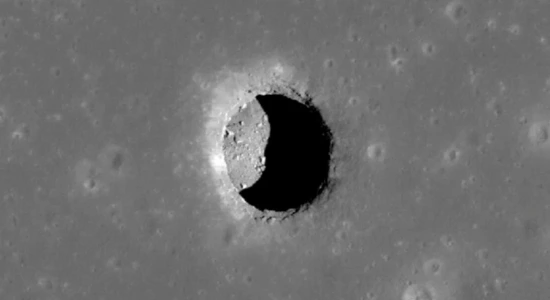
The Marius Hills Pit, roughly 34 meters deep, may be the entrance to a massive underground lava tube.
Table of Contents
A hole nobody has looked inside
There’s a hole on the Moon roughly as deep as a 10-story building, and nobody knows for certain what’s at the bottom of it. On October 1, 2026, NASA selected a mission specifically built to find out. The target is the Marius Hills Pit, a roughly 34-meter-deep, 65-by-90-meter opening sitting in one of the most volcanically diverse regions on the lunar surface.
Scientists have suspected for years that pits like this one are skylights, places where a lava tube’s ceiling collapsed, exposing a much larger cave system underneath. Nobody has ever confirmed it by actually sending instruments down to look.
Fun fact: The Moon’s surface temperature swings by roughly 250°C between lunar day and night. Scientists believe a lava tube cave could stay at a nearly constant, much milder temperature year-round, since it would be shielded from direct sunlight entirely.
Meet GIMLI
The mission is called GIMLI, short for Geophysical Instruments for Marius Lunar pit Investigation, led by Than Putzig of the Planetary Science Institute. It was selected under NASA’s PRISM program, which funds new science payloads aimed at supporting a future human presence on the Moon.
Rather than relying on a single instrument, GIMLI will combine four different detection methods at once:
- Ground-penetrating radar, to map what lies beneath the pit floor.
- Seismic sensors, to detect vibrations that reveal underground voids.
- A gravimeter, to measure subtle changes in gravity caused by hidden empty space.
- Cameras, to directly photograph the pit’s interior walls.
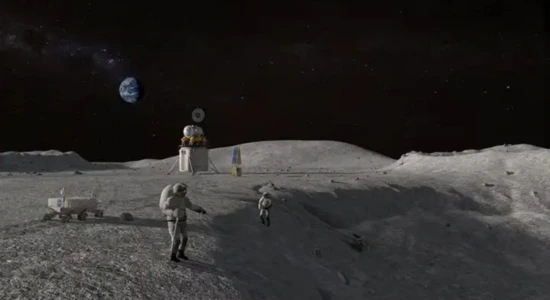
If confirmed, the pit could open into a lava tube cave large enough to shelter astronauts.
The first moonquake survey since 1972
Here’s the detail that makes this mission historic rather than routine: GIMLI’s seismic survey will be the first time humans have measured moonquakes directly from the lunar surface since the Apollo 17 mission in 1972. That’s 54 years without this kind of data. The last time anyone placed a seismometer on the Moon, the mission was crewed and the equipment was limited by 1970s technology.
Why a cave beats a building
If GIMLI confirms a large lava tube beneath the pit, it wouldn’t just be a scientific curiosity. It could become the most practical shelter option for future lunar astronauts, outperforming anything humans could build from scratch. A natural lava tube would provide standing protection from three major threats at once: deadly cosmic radiation with no atmosphere to block it, those extreme 250°C day-night temperature swings, and the constant risk of micrometeoroid impacts on the exposed surface.
In other words, the Moon may already have ready-made real estate for a future base. Humans would just need to confirm it’s there and figure out how to get in.
We already suspected something was down there
This isn’t the first hint that lunar pits hide something bigger. Back in 2024, the European Space Agency used orbital radar to detect signs of a cave system beneath Mare Tranquillitatis, with an entrance at least 55 meters wide and walls extending some 75 meters deep. That evidence came entirely from orbit. GIMLI will be the first mission to investigate a lunar pit directly from the surface itself, turning years of orbital speculation into an actual on-the-ground answer.
Two different problems, one shared goal: Finding shelter isn’t the only unsolved problem for long-term space travel. Researchers have also been working on how to feed astronauts on missions far from any grocery store, including a NASA-backed project that engineered yeast to turn PET plastic waste into protein-rich cookies called µBites. One project searches for a roof over astronauts’ heads, the other searches for what they’ll eat once they’re under it, and both point to the same reality: living beyond Earth means solving problems nobody has had to solve before.