Scientists Turn Plastic Bottles Into Cookies That Could Feed Astronauts
Engineered yeast can now convert PET plastic waste into edible protein.
Table of Contents
The bottle that became a snack
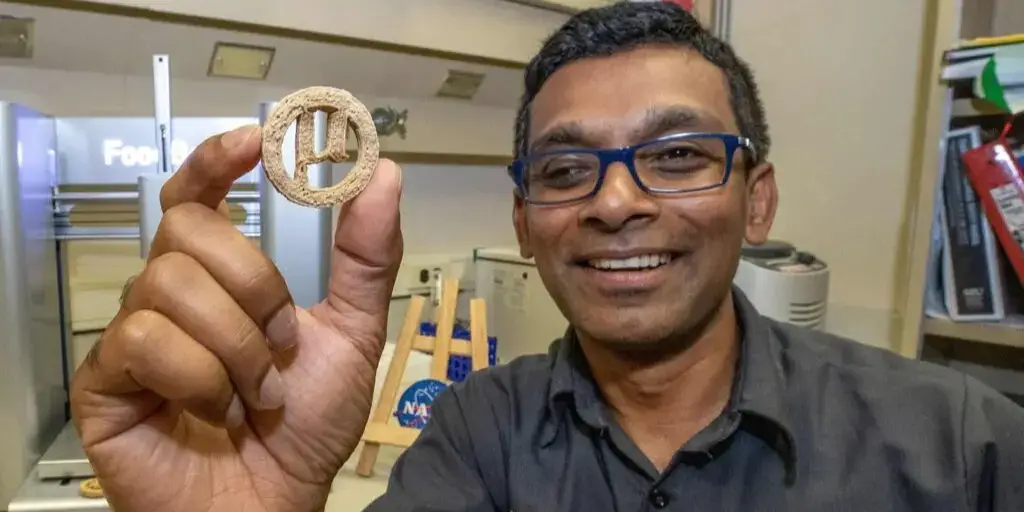
The plastic water bottle you tossed in the recycling bin this morning could, in theory, end up as a cookie eaten by an astronaut on the way to Mars. Researchers at Southern Illinois University (SIU) Carbondale have engineered a strain of yeast that turns PET plastic and crop waste into real food ingredients, then 3D-prints the result into a protein-rich snack called µBites, pronounced “microbites.”
The team presented the work at the American Chemical Society’s Fall 2026 meeting, with partial funding from NASA’s Deep Space Food Challenge, a program searching for ways to feed crews on missions far from any grocery store.
Fun fact: One of the engineered yeast strains converts ethylene glycol, a chemical released when PET plastic breaks down, directly into beta-carotene, the same compound that gives carrots their color and serves as a building block for vitamin A. In other words, part of a discarded bottle can become a vitamin.
Step 1: Dissolving plastic into syrup
Before any yeast gets involved, the plastic has to stop being plastic. Researchers grind up PET bottles and mix them with crop residue, such as corn stalks and leaves, then run the blend through a process called Oxidative Hydrothermal Dissolution. Hot, oxygen-rich water under high pressure breaks the mixture down into a water-soluble syrup, a kind of edible-adjacent slurry that microbes can actually digest.
Step 2: Yeast that eats waste and makes vitamins
This is where the project stops sounding like recycling and starts sounding like science fiction. Three genetically engineered yeast strains each do a different job on that syrup:
- One strain converts ethylene glycol from the broken-down PET into beta-carotene, a vitamin A precursor.
- A second strain produces vanillin, natural vanilla flavoring, from ferulic acid extracted from the plant waste.
- A third strain generates the proteins and fats needed to make the final product nutritionally useful, not just edible.
None of this happens by accident. Each yeast strain was deliberately modified to perform one specific conversion, essentially turning microscopic organisms into a tiny, waste-powered food factory.
Step 3: Printing and baking the cookie
The proteins, fats, and flavor compounds produced by the yeast are blended with fiber, starch, and sweeteners, then loaded into a 3D printer that shapes the mixture into cookie form. A microwave-based baking step finishes the job, producing a shelf-stable snack without a conventional oven or kitchen.
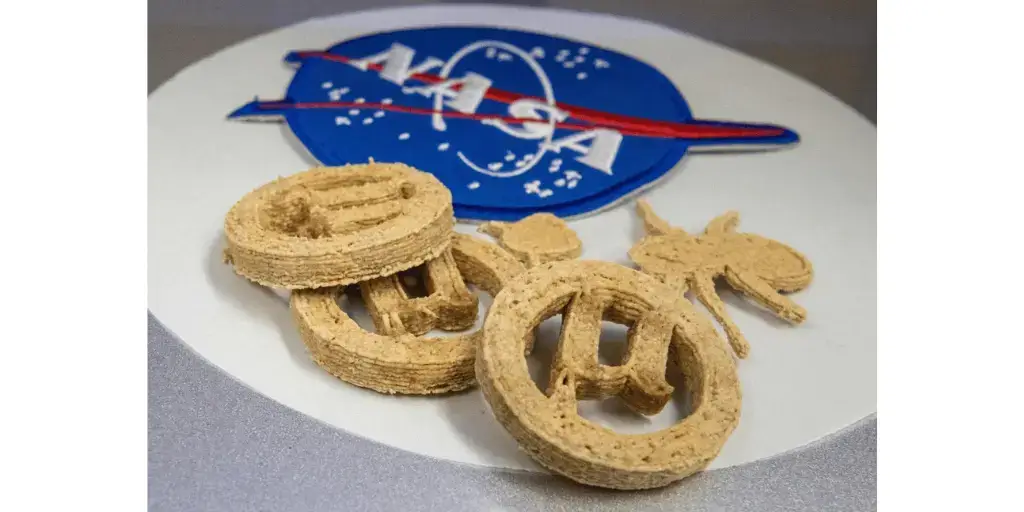
A finished µBites prototype, built entirely from plastic waste and plant scraps.
The numbers behind µBites
The lab results give this story real weight, not just novelty:
- The full conversion process, from bottle to cookie, involves 33 distinct steps.
- Taste testers scored the prototype 6.5 out of 9 in early sensory trials, a respectable result for a first-generation lab food.
- Production currently costs around 60 US dollars per kilogram, reflecting its status as a lab-scale prototype rather than a commercial product.
- The dissolution process converts more than 50 percent of the waste’s carbon content within just one to two days.
Nobody has eaten one yet
Here’s the part that keeps this story grounded: no one outside the lab has actually eaten a µBites cookie. The prototype is still awaiting formal food-safety clearance from regulators before it can reach anyone’s mouth. Third-party lab testing has already confirmed the cookies contain no toxins, heavy metals, allergenic residues, or pathogens, and critically, no leftover plastic makes it into the final product.
Researchers see the technology as a potential answer to two problems at once: plastic waste piling up on Earth, and food scarcity in places where growing crops isn’t an option, whether that’s a disaster zone or a spacecraft en route to another planet. As one team member put it, nature had already solved a version of this problem long before humans started trying, and this project simply points that same biological trick at the plastic humans created.
From explosions to edible innovation: Not every leap in science looks constructive at first glance. In 1908, an asteroid exploded over Siberia with a force that flattened roughly 2,000 square kilometers of forest in the Tunguska event, a reminder of how much raw power nature can unleash in an instant. µBites flips that equation: instead of destructive force reshaping a landscape, engineered biology is quietly reshaping garbage into food. Both stories, in their own way, show how far a single burst of scientific curiosity can travel.
Part of the Series: This story sits alongside other breakthroughs in engineered biology and space-age science on FactFun. Explore more discoveries in our Science section.
References
- Phys.org — Engineered yeasts help turn PET plastic and crop waste into protein-rich cookies (August 2026)
- Yahoo News — Scientists made edible cookies out of plastic (August 2026)
- Forbes — Here’s How Scientists Turned Plastic Bottles Into Nutritious Cookies (August 2026)
- ScienceDaily — NASA-backed scientists turn plastic waste into edible cookies (September 2026)
- Bakery and Snacks — Would you eat a cookie made from a plastic bottle? (August 2026)
- Food Ingredients First — Engineered yeasts turn PET bottles and crop waste into 3D-printed protein cookies (August 2026)
Frequently Asked Questions
What is µBites?
µBites is a prototype cookie developed by researchers at Southern Illinois University Carbondale, made by using genetically engineered yeast to convert PET plastic waste and agricultural scraps into edible protein, fat, and flavor compounds, which are then 3D-printed and baked.
Can you actually eat a µBites cookie right now?
No. µBites is still a laboratory prototype awaiting formal food-safety approval from regulators. Third-party testing has confirmed the cookies are free of toxins, heavy metals, allergens, and pathogens, but they are not yet approved or available for public consumption.
How does plastic get turned into food?
The process starts by breaking down PET plastic and crop waste into a water-soluble syrup using a technique called Oxidative Hydrothermal Dissolution. Genetically engineered yeast strains then ferment that syrup into proteins, fats, vitamin precursors like beta-carotene, and flavor compounds like vanillin, which are combined and 3D-printed into a cookie shape.
Why is NASA involved in this research?
NASA partially funded the project through its Deep Space Food Challenge, which supports technologies that could help feed astronauts on long-duration missions to the Moon or Mars, where resupplying fresh food from Earth is not practical.
How much does it cost to make a µBites cookie?
At the current prototype stage, production costs approximately 60 US dollars per kilogram, a price reflecting lab-scale, small-batch manufacturing rather than a commercially optimized process.