
Imagine placing a stethoscope against a patient’s chest and hearing absolutely nothing. There is no familiar thump-thump, no rhythmic pulsing, and an electrocardiogram monitor would show a completely flat line. For the entirety of human medical history, a beating pulse has been the universal, undeniable sign of life. But inside a groundbreaking operating room at the Texas Heart Institute in Houston, surgeons have successfully thrown millions of years of biological evolution out the window.
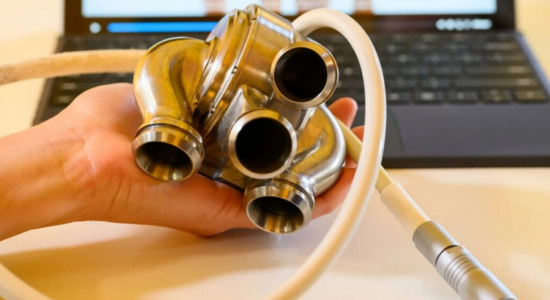
They recently replaced a dying patient’s failing organ with a titanium machine that looks like it belongs inside a tiny jet engine rather than a human chest. By utilizing the exact same magnetic levitation physics that power high-speed bullet trains, engineers have created a mechanical organ that doesn’t beat at all. It simply hums. Let’s look at the incredible, friction-defying biology of the BiVACOR Total Artificial Heart, and why completely eliminating the human pulse might just be the ultimate key to curing heart failure.
The Fatal Flaw of Mechanical Pulses
To figure out why this is such a massive medical breakthrough, you have to look at the brutal physical demands of a biological heart. Your heart beats about 100,000 times a day, which equals roughly 35 million times a year. For decades, bioengineers tried to create artificial hearts that perfectly mimicked this biological rhythm. They built devices using flexible membranes, pneumatic pumps, and artificial valves that physically squeezed blood through the body.
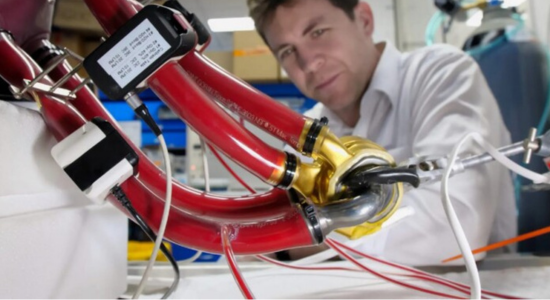
But biology is much better at self-healing than machinery is. When you force a plastic or metal machine to bend and snap shut 35 million times a year, the mechanical parts inevitably wear out, tear, or break down. Worse, the constant snapping of artificial valves creates severe turbulence in the bloodstream. This friction damages red blood cells and heavily increases the risk of blood clotting, which can trigger a catastrophic stroke. Engineers realized that to build a heart that lasts, they had to stop trying to copy nature and completely eliminate mechanical friction.
How the Maglev Total Artificial Heart Eliminates Friction
Instead of a squeezing balloon, the clever engineering behind the titanium maglev total artificial heart relies on a single, continuously spinning rotor. Developed by the medical device company BiVACOR (pronounced bye-VAY-core), founded by Australian biomedical engineer Daniel Timms, this device is roughly the size of a fist. Inside the titanium casing sits a double-sided centrifugal impeller—essentially a bladed disk that acts as a highly efficient water pump, with left and right vanes positioned within two separate pump chambers to replace both ventricles of the heart at once.
Here is where the sci-fi physics come into play: that spinning rotor doesn’t actually touch the casing. Using magnetic levitation (maglev)—the exact same technology that allows Japanese bullet trains to hover above their tracks—the spinning rotor is suspended entirely in mid-air by electromagnetic fields. Because the moving part is floating, there is virtually zero mechanical friction. There is no rubbing metal, no bending plastics, and no mechanical valves to degrade over time. The titanium maglev total artificial heart simply spins rapidly, continuously pulling oxygen-depleted blood toward the lungs and smoothly pushing oxygen-rich blood out to the rest of the body, all through one single moving part.
A Bizarre Biological Reality: Life Without a Pulse
Because the machine operates largely as a continuous flow pump rather than a rhythmic squeezer, it creates a wildly surreal biological side effect: many patients have a dramatically weakened, sometimes barely detectable pulse. Engineers actually designed the device to rapidly modulate the rotor’s speed roughly once per second, generating a degree of pulsatility—but nothing close to the forceful thump-thump of a biological heartbeat. If you were to check a patient’s wrist the traditional way, you might struggle to find anything at all.
While taking the patient’s blood pressure requires specialized equipment, the human body adapts surprisingly well to this altered flow of blood. The organs and brain still receive all the oxygen and nutrients they need, just delivered in a fundamentally different pattern than the violent, pressurized bursts nature originally designed us for. If futuristic medical devices that sound like science fiction fascinate you, you might also enjoy learning about how paralyzed patients are now controlling computers with thoughts using the Neuralink Telepathy chip.
Fun Fact
The first human recipient of the BiVACOR Total Artificial Heart received the implant at the Texas Heart Institute on July 9, 2024. Just eight days later, on July 17, a matching donor heart became available, and the titanium device was removed and replaced with a biological transplant—exactly the outcome the trial was designed to test.
Conclusion
Right now, this magnetic device is strictly being used as a “bridge to transplant”—a high-tech life raft to keep critically ill patients alive just long enough to receive a biological donor heart. Between July and November 2024, five patients received the BiVACOR device as part of an FDA Early Feasibility Study, and every single one was successfully bridged to a donor heart transplant. That early success was enough for the FDA to greenlight an expansion of the trial to 15 additional patients across more hospital sites nationwide. Because the maglev technology essentially eliminates mechanical wear and tear, the ultimate long-term goal is for this device to become a permanent destination therapy rather than just a temporary bridge. In the near future, patients suffering from total heart failure may not have to wait as long on agonizing donor lists. They could simply receive a magnetically levitating turbine, walking out of the hospital alive and well, with a pulse that barely resembles the one they were born with.
BiVACOR, Inc. — BiVACOR Total Artificial Heart Successfully Implanted in Five Patients as Part of FDA Early Feasibility Study
Scientific American — A New Artificial Heart Uses Maglev Technology
IEEE Spectrum — The Maglev Heart
American College of Surgeons — With “Real Momentum,” Total Artificial Heart Technology Faces Defining Chapter
Does a patient with the BiVACOR heart have a pulse
Not in the traditional sense. The device modulates its rotor speed roughly once per second to create some pulsatility, but the forceful thump most people associate with a heartbeat is essentially gone, since blood flows in a much smoother, more continuous pattern than a biological heart produces.
Is the BiVACOR Total Artificial Heart permanent
Not yet. It is currently approved only as a bridge-to-transplant device, meant to keep patients alive until a donor heart becomes available. Researchers hope future versions could eventually serve as permanent destination therapy, but that has not been approved.
How many people have received the BiVACOR heart
Five patients received the device between July and November 2024 as part of an FDA Early Feasibility Study, and all five were successfully bridged to a donor heart transplant. The FDA has since approved expanding the trial to 15 more patients.
Why doesn’t the maglev heart wear out like older artificial hearts
Older artificial hearts relied on flexing membranes and mechanical valves that physically wore down after millions of cycles. The BiVACOR heart’s rotor is suspended by magnetic levitation with no physical contact against its casing, which removes the friction responsible for most mechanical failures.