
At the dawn of the 20th century, walking into an American grocery store was essentially playing a high-stakes game of biological Russian roulette. There were no ingredient labels, no expiration dates, and absolutely no federal regulations keeping toxic chemicals out of the food supply. Dairy farmers routinely stirred formaldehyde—the exact same chemical morticians use to embalm dead bodies—into aging milk to kill off the rotting odor and sell it as fresh. Butchers scrubbed rotting, graying meat with borax to make it look red again, while candy makers tinted their products with lead-based and arsenic-laced dyes just to make the colors pop on store shelves.
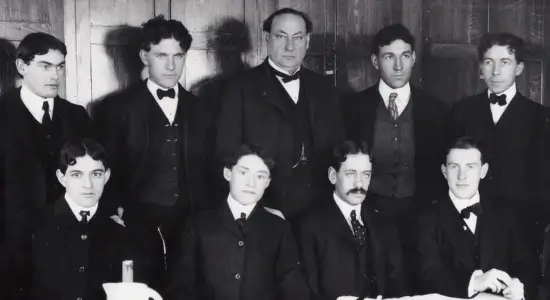
Someone had to prove that this unregulated chemical cocktail was destroying human health, but animal testing wasn’t going to cut it—critics could always argue that what harmed a rat or a dog said nothing about what it would do to a person. In the fall of 1902, Dr. Harvey Washington Wiley, the Chief Chemist of the USDA’s Bureau of Chemistry in Washington, D.C., devised a radical, deeply unsettling experiment. He recruited twelve healthy young men, seated them at a specially built dining table in a government building, and intentionally fed them measured doses of poison with every meal. The study became officially known as the “Hygienic Table Trials,” but reporters covering the story quickly gave it a far more memorable—and far more accurate—nickname: the Poison Squad.
The Deadly Culinary Landscape Before The Poison Squad
Dr. Wiley was a man obsessed with chemical purity, and for good reason. By the late 1800s, America was rapidly industrializing, shifting from local farm diets to massive urban supply chains stretching across entire states. Food had to travel further and sit on shelves longer than ever before. Without modern refrigeration or any legal oversight, food manufacturers turned to cheap, completely untested chemical preservatives to stop spoilage and disguise decay. Wiley suspected that millions of Americans were being slowly poisoned with every meal, but as chief chemist he lacked the hard, systematic clinical data needed to force a reluctant Congress into passing regulatory laws. To get that data, in his view, he needed human test subjects—not just lab animals.
Welcome to the Basement Dining Room of Doom
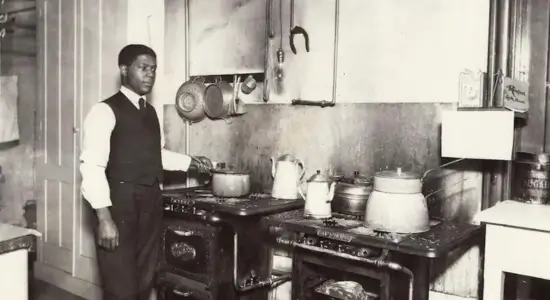
In 1902, Congress granted Wiley funding to set up a dedicated “hygienic table” dining room within the Bureau of Chemistry’s building. He recruited a rotating group of a dozen volunteers at a time—mostly young government clerks and chemists—over what would ultimately become a five-year study. The rules of the Harvey Wiley food safety trials were incredibly strict. The men received free, well-prepared meals, but in exchange they pledged to eat and drink absolutely nothing outside of that dining room, with the sole exception of a carefully measured, logged amount of water.
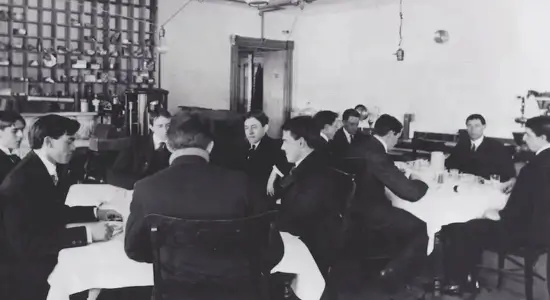
In exchange for the free food, they agreed to ingest steadily increasing doses of a single test chemical at a time—rotating through borax, salicylic acid, sulfuric acid, sodium benzoate, and formaldehyde over the course of the study, with doses climbing from as little as one-fifth of a gram up to four grams by its final years. The chemicals were typically hidden inside gelatin capsules and swallowed partway through the meal. Physicians from the Public Health and Marine Hospital Service examined the volunteers weekly, and the men had to carefully record their own weight, temperature, and pulse before every single meal—turning their own bodies into walking laboratories. If this kind of deliberate self-experimentation in the name of science intrigues you, it’s worth reading about why doctors are actually prescribing fecal transplants to cure the incurable, another case where scientists had to push past squeamishness to save lives.
The Physical Toll of Eating Embalming Fluid
The human body is an incredibly resilient machine, but it was absolutely not designed to process industrial-grade preservative chemicals meal after meal, month after month. As the study progressed and doses climbed, the physical toll on the volunteers became impossible to ignore.
Volunteers reported nausea, vomiting, stomach cramps, and headaches severe enough that some men couldn’t perform any work at all. According to Wiley’s own final reports, most of the discomfort was temporary, and historical reviews of the study found no evidence of permanent injury to any participant. Still, Wiley himself grew alarmed at how sick some men became, and he adopted a strikingly cautious standard for the era: if a chemical caused even temporary distress in a healthy young volunteer eating controlled portions, it had no business being added to food consumed by the general public—including children, the elderly, and the sick—who had no way of knowing how much of it they were really eating.
How a Basement Experiment Birthed Modern Food Safety
Newspapers ran daily, sensationalized updates on the men’s deteriorating condition, and the public was horrified to learn that the very same chemicals sickening young volunteers in a government dining room were quietly sitting in their own kitchen pantries. The Harvey Wiley food safety trials weren’t the only spark, though—public outrage exploded even further in 1906 when Upton Sinclair published The Jungle, a novel exposing horrifying, unsanitary conditions inside the American meatpacking industry. Between Wiley’s clinical data and Sinclair’s visceral exposé, the political gridlock in Washington finally broke. On June 30, 1906, President Theodore Roosevelt signed both the landmark Pure Food and Drug Act and the Meat Inspection Act into law, completely revolutionizing American public health and laying the foundational groundwork for what would formally become the Food and Drug Administration (FDA) in 1930.
Fun Fact
The 1906 Pure Food and Drug Act specifically required eleven dangerous ingredients to be disclosed on labels if present—including alcohol, morphine, opium, and cocaine, all of which were legally hiding in everyday tonics and “medicines” at the time.
Conclusion
The idea of a government scientist intentionally feeding poison to his own colleagues sounds like the plot of a dark dystopian novel, but it was, in Wiley’s mind, a necessary sacrifice in the name of biological safety. The brave men who sat at that basement-style dining table traded their own short-term comfort to pull the food industry out of the chemical dark ages. Today, every time you buy a gallon of milk or read a transparent ingredient label on a box of cereal, you owe a quiet debt of gratitude to Dr. Wiley and the iron-stomached volunteers who ate poison, on purpose, to help build the food safety system we now take for granted.
PBS American Experience — The Poison Squad: Harvey Wiley’s Crusade
U.S. Food and Drug Administration (FDA) — The Story of the Laws Behind the Labels
Chemical & Engineering News (ACS) — ‘Poison Squads’ Tested Chemical Preservatives
FDA — The 1906 Food and Drugs Act and Its Enforcement
Was the Poison Squad experiment legal
Yes. It was funded directly by Congress and run inside a federal building. There were no laws against human experimentation at the time, and every volunteer joined willingly, signed a pledge, and was free to quit—several did once doses became too intense.
Did anyone die during the Poison Squad trials
No deaths were recorded. Volunteers experienced nausea, cramps, and headaches severe enough to occasionally end participation, but Wiley’s own reports and later historical reviews found no evidence of lasting or fatal harm to any member of the squad.
How long did the Poison Squad trials last
The hygienic table trials ran for roughly five years, from 1902 to 1907, with rotating groups of about twelve volunteers testing one preservative chemical at a time under strict dietary control.
What law came out of the Poison Squad experiment
Wiley’s data helped push Congress to pass the Pure Food and Drug Act of 1906, signed by President Theodore Roosevelt on June 30, 1906, alongside the Meat Inspection Act. Together they laid the legal foundation for what eventually became the FDA in 1930.