
In 2001, a fossil fragment went missing from a research collection in southern Brazil. Not dramatically stolen, not destroyed, just misplaced somewhere in the ordinary chaos of a university archive. For twenty-one years, that missing piece meant an entire ancient species couldn’t be formally identified. Then in 2022, someone opened a drawer at the right university and found it. That species is Silescelida acristata, and its 20-year disappearance is written directly into its name.
 Fossil remains of Silescelida acristata, a newly described Triassic archosauriform from Rio Grande do Sul, Brazil.
 Table of Contents
A 240-Million-Year-Old Survivor of the “Great Dying”
Silescelida acristata is a newly described reptile that lived roughly 240 million years ago in what’s now Dona Francisca, a municipality in Brazil’s Rio Grande do Sul state. Researchers from the Federal University of Santa Maria’s Quarta Colônia Center for Paleontological Research, working alongside teams from the Federal University of Rio Grande do Sul and the Pontifical Catholic University of Rio Grande do Sul, published the formal description in Scientific Reports in August 2026.
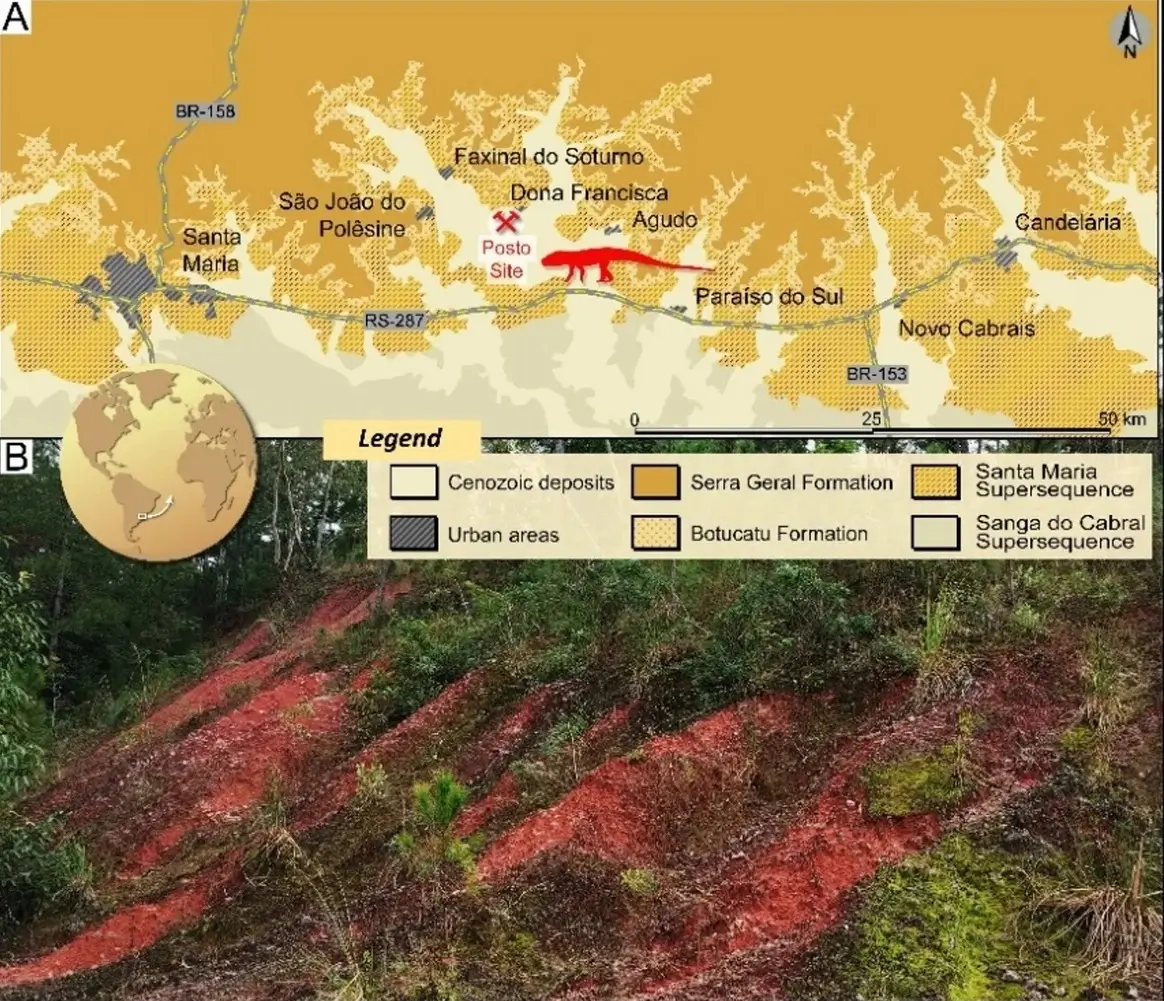 The discovery site sits within the Santa Maria Formation in Rio Grande do Sul, part of the UNESCO-recognized Quarta Colônia Geopark.
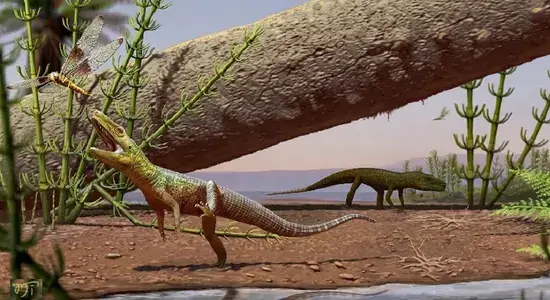
It lived roughly 12 million years after the Permian-Triassic extinction, often called the “Great Dying,” the most severe mass extinction event in the planet’s history. That timing matters. Ecosystems were still rebuilding, and a wide range of reptile lineages were experimenting with new body shapes and survival strategies to fill the ecological gaps the extinction had left behind. Silescelida acristata, built roughly like a small, slender alligator and almost certainly a hunter of animals smaller than itself, was one of those experiments.
What Its Legs Reveal About the Rise of Dinosaurs
Most of what survived of this animal are limb bones, which sounds unglamorous until you understand what those bones actually reveal. Silescelida acristata belonged to the archosauriform lineage, the broad group of reptiles that would eventually branch into archosaurs, and from there into both crocodilians and dinosaurs, birds included.
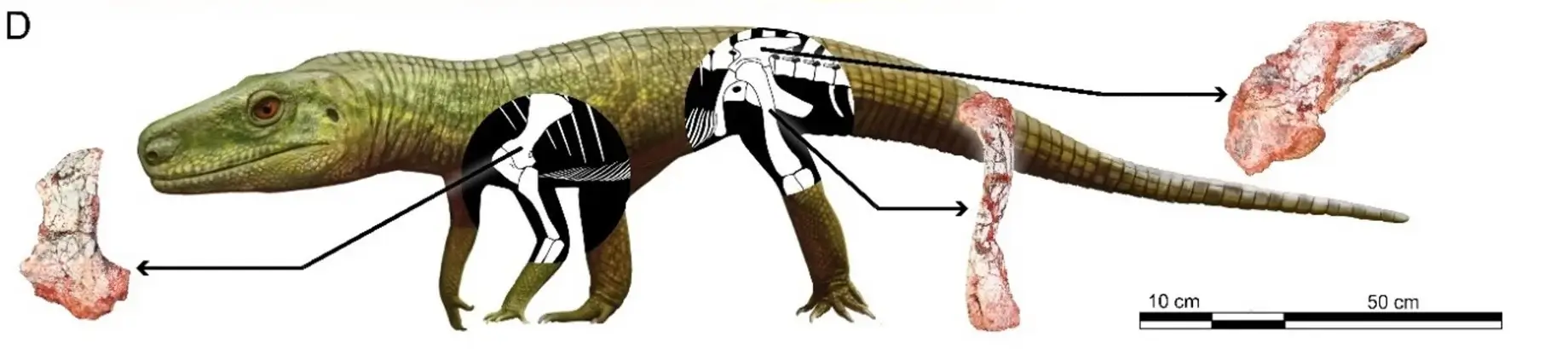
 An artistic reconstruction of Silescelida acristata navigating its Triassic environment roughly 240 million years ago.
Its femur shows a semi-erect leg posture, positioned further underneath the body rather than sprawled out to the sides the way many earlier reptiles stood. That single anatomical shift reduced drag and made walking more efficient, a small evolutionary tweak that would later become far more pronounced in dinosaurs, whose limbs eventually sat directly beneath their bodies. In other words, this unassuming Brazilian fossil captures a mid-step snapshot of the exact kind of change that made the entire dinosaur body plan possible.
Long before dinosaurs dominated the planet, the Triassic period was already producing reptiles with bizarre, transitional anatomy that doesn’t fit neatly into modern categories. Snaky McCrocface, an oddly serpentine crocodile relative from roughly the same era, is part of that same story: a world of reptilian lineages testing out body plans that either dead-ended or eventually gave rise to the animals we’d recognize today.
Why Scientists Named It After Silence
The genus name Silescelida combines root words tied to “silence” and “leg.” That’s not a poetic flourish, it’s a direct reference to the fossil’s own backstory. Part of the original specimen, the fragment that recorded exactly where and in what rock layer it had been found, went missing from the collection for more than 20 years after its initial discovery. Without that context, researchers couldn’t confirm the specimen’s geological origin well enough to formally describe it as a new species.
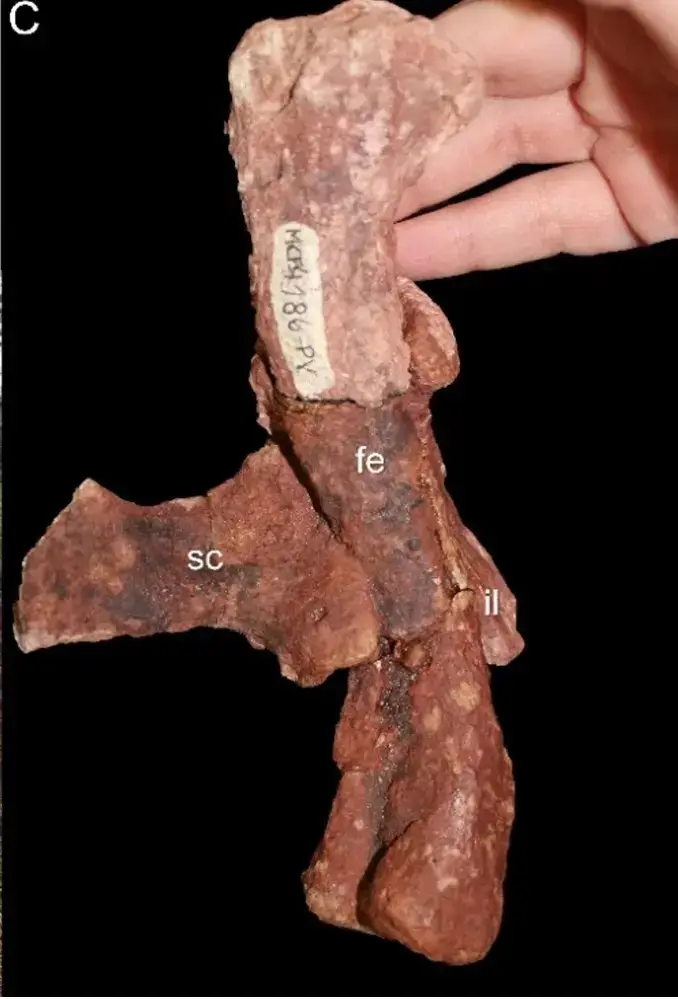
 The rediscovered fragment finally allowed researchers to confirm the specimen’s origin and formally describe the species.
The species name, acristata, means “without a crest.” It refers to a specific missing feature on the femur: most of this animal’s close relatives have a bony ridge called a trochanter, a muscle attachment point near the top of the thigh bone, and Silescelida acristata simply doesn’t have one. That absence is one of the details that sets it apart from nearly everything else in its family tree.
Fun Fact
The rediscovery happened almost by accident. In 2022, researchers were doing a routine technical visit to the fossil collection at the Pontifical Catholic University of Rio Grande do Sul when they located the missing fragment, sitting exactly where it had been filed away two decades earlier, just never properly connected to the rest of the specimen.
What This Fossil Changes
Beyond its unusual paper trail, Silescelida acristata is scientifically useful for a specific reason: its likely family connections. Phylogenetic analysis suggests it may be closely related to Euparkeriidae, a rare and still poorly understood group of archosauriforms whose fossils had previously been found almost exclusively in Africa, Asia, and Europe.
Finding a probable relative in South America expands the known range of that entire group substantially. Since all of Earth’s continents were still fused into the supercontinent Pangaea during the Triassic, animals could move across landmasses that are now separated by full oceans, and this fossil suggests Euparkeriid relatives spread much further across that ancient world than the existing fossil record had shown. It also reinforces something paleontologists already suspected: Rio Grande do Sul, now protected in part as the UNESCO Quarta Colônia Geopark, is one of the most important places on Earth for understanding what happened in the run-up to the age of dinosaurs.
Fortune / The Conversation — A Fossil Lost For 20 Years Just Rewrote the Map of Dinosaur Ancestors
Nerdbot — 240-Million-Year-Old Reptile Fossil in Brazil Dates Back to Before the Dinosaurs
What is Silescelida acristata
Silescelida acristata is a newly described reptile species that lived around 240 million years ago in what is now Rio Grande do Sul, Brazil. It belonged to the archosauriform lineage, the group of reptiles that eventually gave rise to both dinosaurs and crocodilians.
Why was part of this fossil lost for 20 years
A fragment containing key information about the fossil’s exact location and geological context was accidentally separated from the rest of the specimen and went unnoticed in a university collection for over two decades, until researchers rediscovered it in 2022 during a routine collection visit.
Why does Silescelida acristata matter for understanding dinosaur evolution
Its femur shows a semi-erect leg posture that represents an early step toward the more efficient, upright limb positioning later seen in dinosaurs. It also suggests a rare reptile group previously known only from Africa, Asia, and Europe was more widespread across the ancient world than scientists realized.
What does the name Silescelida acristata mean
Silescelida combines root words for “silence” and “leg,” referencing both the decades the fossil fragment spent forgotten and the limb bones that make up most of the specimen. Acristata means “without a crest,” referring to a bony ridge missing from its thigh bone that most close relatives have.