MIT Turned Living Bacteria Into Working Transistors
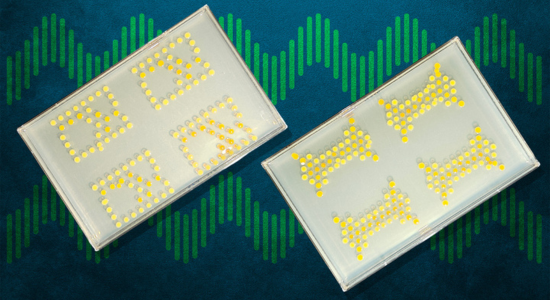
MIT researchers printed engineered bacterial colonies to behave like electronic transistors.
Table of Contents
Bacteria that compute
A living bacterium takes roughly eight hours to finish a single calculation that a laptop completes in a fraction of a second, and yet MIT engineers just built one anyway. Researchers led by Christopher Voigt printed colonies of engineered bacteria onto a petri dish, arranged like components on a circuit board, and got them to perform actual logic operations, including addition. The work was published in Nature Chemical Biology on August 17, 2026.
Instead of electrons moving through copper wires, these living circuits pass chemical signals from one bacterial colony to the next, a form of computing MIT calls a “distributed biological computer.”
Fun fact: The bacteria used in this experiment, Pantoea agglomerans, is not some exotic lab specimen. It naturally lives on plant leaves and roots, which is exactly why the MIT team chose it: the eventual goal is coating real plants with it.
How a living transistor works
In electronics, a transistor switches a signal on or off based on an input voltage. MIT’s version does the same job with chemistry instead of electricity. The team engineered two transistor-like bacterial strains that respond to a molecule called OC-6, but in opposite ways: one activates when OC-6 is present, the other shuts off. A separate signal molecule, OC-12, acts as the actual data being processed.
To get a signal from one colony to the next, the team added three additional “relay” strains. These don’t compute anything themselves; they simply detect a chemical called OHC-14 and pass it along, functioning like the wires connecting transistors on a real circuit board.
Building a circuit out of 24 colonies
Individual transistors are one thing. A working computer is another. To prove the concept could scale, the MIT team printed 24 separate bacterial colonies onto a single plate, spacing each one about 5 millimeters apart so chemical signals would only reach their intended neighbor rather than bleeding across the whole dish.
With that arrangement, the living circuit successfully performed multi-input logic gates, an OR gate, a demultiplexer, and, most impressively, a two-bit adder, a basic arithmetic circuit capable of adding binary numbers.
- 2 engineered strains function as transistors, switching on or off based on OC-6.
- 3 engineered strains function as relays, forwarding chemical signals between colonies.
- 24 total colonies were printed together to build the largest circuit demonstrated so far.
- Colonies were spaced 5 millimeters apart to keep signals from spreading uncontrolled.

A day-by-day time-lapse of the bacterial colonies growing into their printed circuit pattern.
The catch: eight hours per calculation
Here’s the number that keeps this breakthrough honest: each calculation takes about eight hours to complete. That’s not a typo. A living circuit built from these bacteria is roughly ten million times slower than a basic pocket calculator, because chemical diffusion between colonies simply cannot move at the speed of electricity through wire.
The MIT team isn’t trying to hide that limitation, and they aren’t trying to beat silicon at its own game either. The real advantage of this system is that reprogramming it doesn’t require editing a single strand of DNA. Changing what the circuit calculates is as simple as changing the physical pattern the colonies are printed in, similar to rearranging components on a breadboard rather than rewriting software.
Why plants, not computers
So why build a computer that takes eight hours to add two numbers? Because MIT was never trying to replace your laptop. The actual target is agriculture. Pantoea agglomerans already lives naturally on plant surfaces, so a version of this living circuit could theoretically be applied directly onto leaves or roots, sensing real-world conditions like drought stress or fungal infection and automatically triggering the plant’s own chemical defenses in response.
In that context, eight hours isn’t slow at all. A plant doesn’t need millisecond reflexes to respond to a drought that develops over days, it needs a system that can live on its surface indefinitely, requires no batteries, and reprograms itself through printing rather than rewriting genetic code every time the target problem changes.
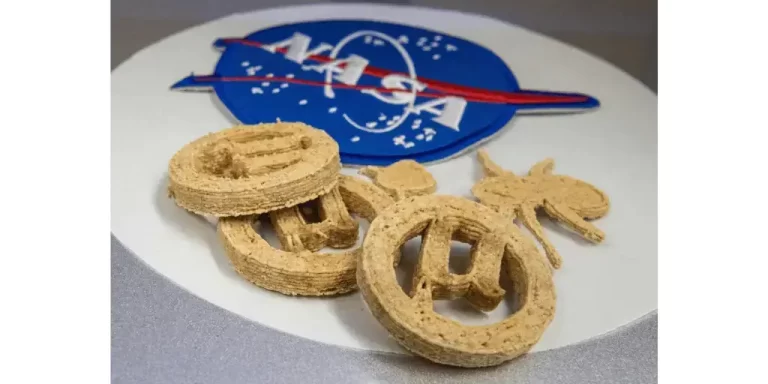
Two very different uses for engineered microbes: Bacteria are already proving they can do more than anyone expected. Just weeks before this study, researchers unveiled µBites, a cookie made by engineering yeast to convert PET plastic waste into edible protein for NASA’s Deep Space Food Challenge. One project turns microbes into a food factory, the other turns them into a computer, and both rely on the same core idea: microorganisms can be reprogrammed to solve problems nature never asked them to solve.
Part of the Series: This story is part of FactFun’s ongoing coverage of engineered biology and synthetic life breakthroughs. Discover more in our Science section.
References
- MIT News — MIT engineers connect bacteria to create living transistors (August 2026)
- Nature Chemical Biology — Original research publication (August 17, 2026)
- Times of India — MIT engineers turn living bacteria into circuit boards that can perform computer-like calculations (August 2026)
- India Today — Bacteria that think? MIT engineers build living systems that compute (August 2026)
- ScienceDaily — MIT turns bacteria into living transistors (September 2026)
- IRZ — Twenty-four bacterial colonies to add two bits (August 2026)
Frequently Asked Questions
What are MIT’s bacterial transistors?
MIT’s bacterial transistors are engineered strains of the bacterium Pantoea agglomerans that switch on or off in response to specific chemical signals, mimicking the function of electronic transistors. When printed together with relay strains that pass signals between colonies, they form a living circuit capable of basic computing.
How fast can a bacterial computer calculate?
Each calculation takes approximately eight hours to complete, making it roughly ten million times slower than a basic electronic calculator. The speed is limited by how quickly chemical signals can diffuse between bacterial colonies.
What can this living circuit actually do?
In the MIT study, a circuit built from 24 bacterial colonies performed multi-input logic gates, an OR gate, a demultiplexer, and a two-bit adder capable of basic binary arithmetic.
Do you need to edit DNA to reprogram the circuit?
No. One of the key findings is that the circuit’s function can be changed simply by altering the physical pattern in which the bacterial colonies are printed, without modifying the underlying genetic code of any strain.
What is the real-world goal of this research?
The MIT team’s long-term goal is agricultural, not computational. Because the bacteria used naturally live on plant surfaces, the technology could eventually be applied to leaves or roots to help plants sense environmental stress, such as drought or fungal infection, and automatically trigger their own chemical defenses.