
It’s 1932 in Western Australia. Thousands of British and Australian veterans from World War I have just been handed land to farm wheat. The Great Depression recently hit, global wheat prices have tanked, and everyone is barely scraping by. Just when things seem like they couldn’t possibly get any worse, a massive, unstoppable force invades the farmland. But it wasn’t a foreign army or a plague of locusts. It was 20,000 giant, flightless birds.
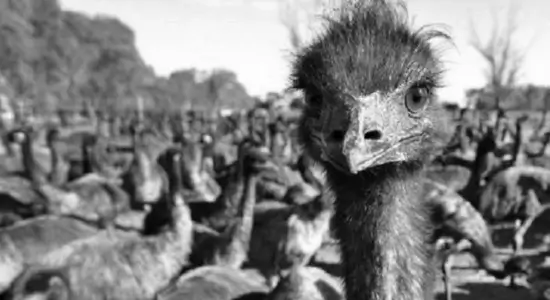
Emus naturally migrate toward the coast after their breeding season. But this time, they stumbled onto newly cleared, heavily irrigated wheat fields. To the birds, this was essentially a massive, all-you-can-eat buffet. They obliterated the crops and smashed massive holes through the fences keeping the local rabbits out. The desperate farmers—who, remember, were combat veterans—knew exactly what they wanted. They petitioned the government for military-grade machine guns. In a move that sounds straight out of a comedy sketch, the Minister of Defence actually agreed.
Marching into the Great Emu War
The government quickly dispatched Major G.P.W. Meredith, a couple of soldiers, two Lewis automatic machine guns, and 10,000 rounds of ammunition. They fully expected to mow down the birds in a few days, save the farms, and go home heroes. But they severely underestimated their enemy. Emus aren’t just oversized chickens; they are highly evolved survival machines that can sprint at over 30 miles per hour and pivot on a dime.
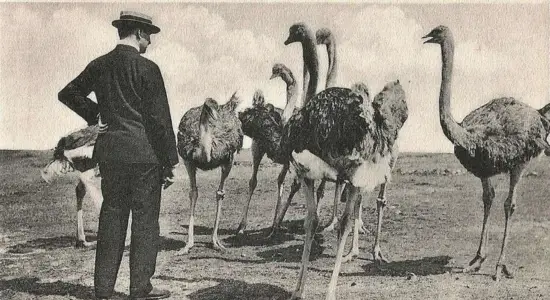
As soon as the soldiers opened fire, the harsh reality of the Australian army emu war set in. The birds didn’t cluster together in a panic like the military expected. Instead, they instantly scattered in every possible direction, breaking into small, erratic groups. The Lewis guns were heavy, clunky, and completely useless against hundreds of fast-moving targets running in unpredictable zigzag patterns across uneven dirt.
The Biological Armor of a 100-Pound Bird
Hitting a sprinting emu is hard enough, but actually bringing one down is a whole different biological nightmare. Emus are built like feathered tanks. They have dense, thick layers of feathers that essentially act as natural Kevlar against small-caliber bullets. You could hit a bird directly in the body, and it would just absorb the kinetic energy, shake it off, and keep running.
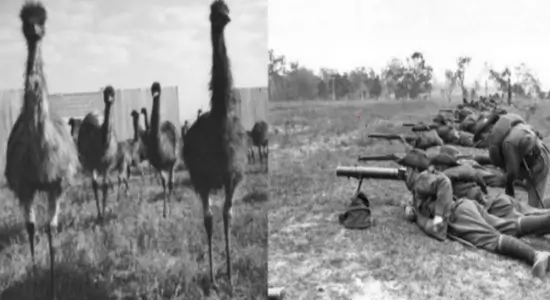
Worse, the birds actually seemed to develop military tactics. Major Meredith later told the press that each small mob of emus had a designated leader—a massive black-plumed bird that would stand watch while the others stripped the wheat. The moment the soldiers approached, the leader bird would signal the flock to scatter, waiting until his crew was safely out of range before fleeing himself. The humans were literally being out-strategized by giant poultry.
The Ultimate Military Humiliation
Desperate for a win during the Australian army emu war, Meredith tried a new tactic. He mounted a machine gun to the back of a truck to chase the birds down. It was a total, unmitigated disaster. The terrain was incredibly bumpy and the truck was too slow to catch the sprinting birds. The gunner was bouncing around so violently he couldn’t fire a single shot before they eventually crashed right through a farmer’s fence.
After roughly a month of highly publicized embarrassment, the military quietly withdrew. They had fired nearly 10,000 rounds of ammunition and only managed to kill a few hundred birds out of a 20,000-strong flock. Major Meredith later gave a quote that perfectly summed up the absurdity of the situation: he stated that if the military had a division with the bullet-carrying capacity of these birds, it could face any army in the world.
The Rabbit Hole Goes Deeper…
If you thought losing a military conflict to a flock of flightless birds was the most absurd thing humans have ever done, history has plenty of other bizarre moments waiting for you.
-
Think the 1930s emu invasion was a rough time for humanity? Try living through an era where the entire planet essentially hit the self-destruct button all at once. Dive into the global chaos of The General Crisis: Why the 17th Century Was Absolute Hell.
-
Or maybe you’re looking for authority figures making even more unhinged decisions than declaring war on poultry. Step inside the medieval Vatican to uncover the morbid absurdity of The Cadaver Synod: Why the Vatican Put a Dead Pope on Trial.
Conclusion
The government eventually realized that deploying machine guns makes for terrible agricultural pest control. They shifted to a localized bounty system, which allowed the farmers to handle the problem themselves—and it actually worked. But the legacy of the 1932 conflict remains one of history’s greatest reality checks. It proves that no matter how much firepower humans bring to the table, nature’s sheer resilience, speed, and evolutionary armor can still make us look incredibly foolish.
References:
Scientific American — The Great Emu War: When the Australian Army Lost to Birds
National Geographic — How Australia’s Emu War Showed the Limits of Military Might