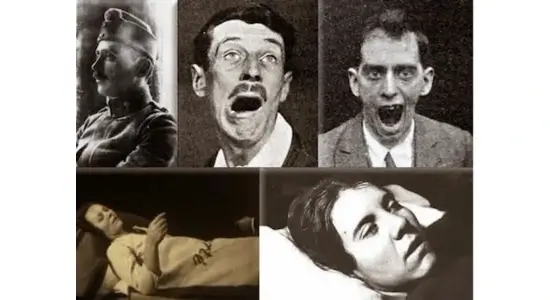

The Horrifying Reason the Architects of Unit 731 Escaped Justice
In 1936, the Imperial Japanese Army built a sprawling, state-of-the-art medical compound in Pingfang, China. From the outside, the facility was disguised as a massive industrial lumber mill.
Inside, it was a slaughterhouse. It was called Unit 731.
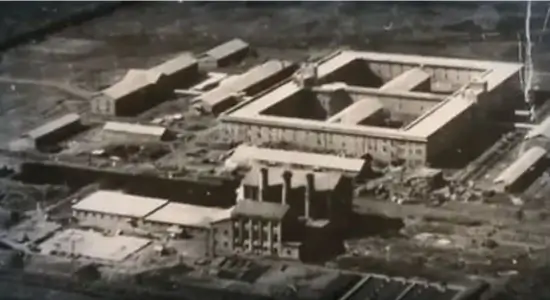
The men running this facility wore pristine white lab coats and held advanced medical degrees. But they were not trying to save lives. They were trying to figure out exactly how much agony the human body could sustain before it finally shut down.
The Mechanics of Torture
Under the command of General Shiro Ishii, the goal of Unit 731 was to perfect biological warfare. Ishii wanted to engineer weapons of mass destruction, and to do that, he demanded raw, unfiltered human data.
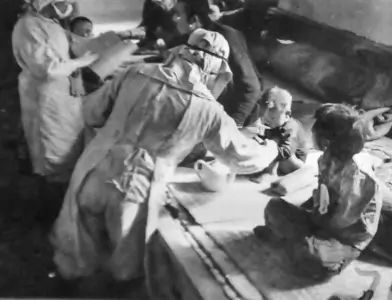
Thousands of innocent men, women, and children were intentionally infected with anthrax, cholera, and the bubonic plague. To see exactly how these diseases ravaged internal organs, surgeons conducted vivisections on perfectly awake, unanesthetized prisoners.
Other researchers dropped victims into freezing water to study frostbite. They would leave the prisoners outside in the freezing winter, striking their frozen limbs with wooden sticks until they sounded like solid boards.
The “Maruta” Protocol
To perform these extreme atrocities daily, the scientists had to psychologically erase the humanity of their victims. They created a sickening internal language to normalize the horror.
Because the facility was officially listed as a lumber mill, the researchers referred to their human prisoners as maruta, which translates directly to “logs.”
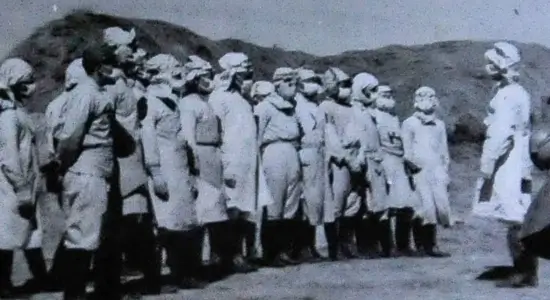
When a scientist needed a new victim to infect with weaponized fleas or lock inside a high-pressure chamber, they simply asked the armed guards to go and cut down another log.
Did You Know? History is filled with nightmares that sound like horror movies but are terrifyingly real. Sometimes the scariest threats aren’t found in a secret military lab, but are hiding in plain sight—whether it’s an intruder in your own home or an invisible glitch in the human body.
-
Imagine locking your doors at night, completely unaware that a murderer has already moved into your ceiling. In 1922, a Bavarian family experienced exactly that in The Terrifying Truth About the Killer Who Never Left the Hinterkaifeck Farm.
-
Or imagine waking up one day trapped inside your own paralyzed body—fully conscious but unable to move or speak for decades. That was the horrific reality of The Sleep That Didn’t End: How a Ghost Virus Turned 500,000 People into Living Statues.
The Sickening Deal
When World War II ended in 1945, you would naturally expect Shiro Ishii and his butchers to face the hangman’s noose at a war crimes tribunal. That never happened.
The United States military desperately wanted Ishii’s biological warfare data. The Americans knew they could never legally or ethically conduct these horrific experiments themselves, but they wanted the results for the looming Cold War.
American intelligence officers struck a dark, highly classified bargain. They granted absolute, blanket immunity to the scientists of Unit 731. In exchange, the United States got the research files.
Conclusion
The monsters of Pingfang did not hide in the shadows after the war. Because their records were wiped clean by the Allied forces, they simply went home and put their lab coats back on. Many of the lead researchers of Unit 731 leveraged their medical experience to build highly successful postwar careers. They became respected university presidents, leading medical authors, and wealthy pharmaceutical executives. It is a chilling reality check: the architects of the worst nightmares in history didn’t go to prison. They went straight to the boardroom.
References:
- The New York Times – Search for “Unit 731 Japan biological warfare immunity”
- The Guardian – Search for “Unit 731 human experiments US cover-up”
- PBS American Experience – Search for “Unit 731 biological weapons program”