
The Chilling Reason the Catholic Church Authorized an Exorcism on a Duplex
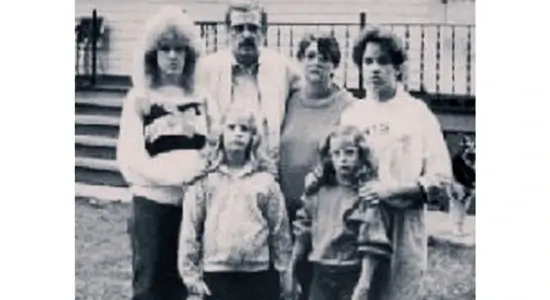
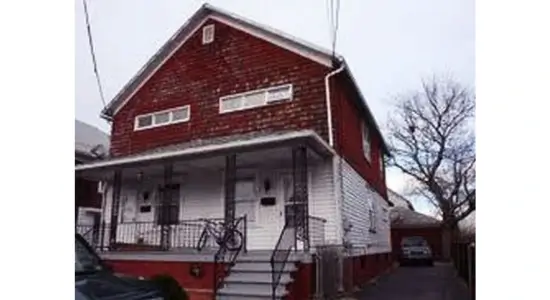
In August 1986, an Associated Press wire story turned a modest double-block house on Chase Street in West Pittston, Pennsylvania into a household name. Jack and Janet Smurl told reporters their home had become something closer to a war zone than a residence: doors slamming on their own, a foul stench of rotting meat with no source, and something strong enough to hurl their 75-pound German Shepherd against a wall.
The family said it had been going on, in one form or another, since 1974. By the time national media picked up the story twelve years later, the Smurls were exhausted, the Diocese of Scranton was involved, and one of the most famous paranormal investigation teams in America was about to walk through their front door.
A Slow Escalation, Then a Breaking Point
According to the Smurls’ own account, the earliest incidents were mundane enough to shrug off. Appliances flickered and died for no clear reason. Small objects went missing and turned up in strange places. It wasn’t until years later, the family said, that things turned openly hostile: voices that mimicked their daughters calling out from empty rooms, footsteps on stairs when no one else was home.
By 1985, the reports had escalated dramatically. Janet said she was pulled from bed by her ankles while she slept. Jack described being pinned in place by a shadow-shaped mass he couldn’t move against. The family later told investigators the presence seemed to draw strength from their fear and fatigue rather than fading over time.
Ed and Lorraine Warren Arrive
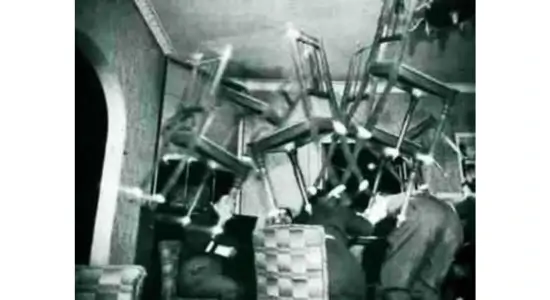
Out of options, the Smurls contacted Ed and Lorraine Warren, the demonologist couple later famous for their work on the Amityville and Enfield cases and the inspiration behind The Conjuring film franchise. After visiting the house, the Warrens concluded the Smurls were dealing not with one presence but four: three lesser spirits and, they claimed, a single demonic entity directing all three.
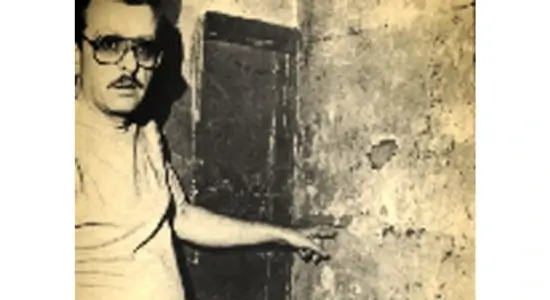
Local media coverage brought outside witnesses into the story too. Neighbors reportedly called police after seeing dark shapes moving past the home’s windows, and journalists staking out the property said they heard rhythmic pounding from inside the walls. Whether that pounding had a mundane explanation was never conclusively settled either way.
Did You Know? Some of history’s strangest documented events involve entire communities losing control at once, no demon required. In 1518, a woman in Strasbourg started dancing in the street and couldn’t stop. Within a month, hundreds had joined her, some reportedly dancing until they collapsed or died. Physicians at the time prescribed more dancing as the cure. Read the full story of the 1518 dancing plague for one of the eeriest unsolved mass phenomena on record.
Skeptics Weren’t Convinced
Not everyone accepted the demon explanation, and the pushback was formal, not just casual doubt. Paul Kurtz, a philosophy professor at the State University of New York at Buffalo and then-chairman of the Committee for the Scientific Investigation of Claims of the Paranormal, published a lengthy rebuttal in the Skeptical Inquirer. Kurtz argued the Warrens lacked scientific or parapsychological credentials, called their involvement non-objective, and described the entire case as, in his words, “a hoax, a charade, a ghost story.”
Kurtz went further, suggesting the family’s experiences could stem from psychological factors and recommending psychiatric evaluation, working alongside a psychiatrist and psychologist to build his case study. The Smurls and the Warrens, for their part, declined to allow fully independent investigation of the house, which left Kurtz’s team unable to test the claims directly. That standoff is a big part of why the Smurl case remains contested rather than settled, decades later.
When Religion Stepped In
The Catholic Church rarely acts quickly on paranormal claims, and church officials typically require substantial documentation before authorizing anything close to a formal exorcism. In the Smurls’ case, the Diocese of Scranton eventually did approve one, and Father Robert McKenna performed the traditional Latin rite inside the home.
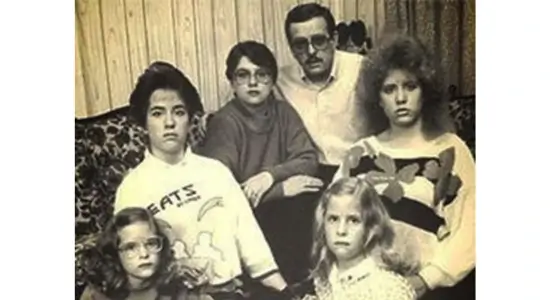
By the family’s account, the ritual didn’t resolve anything. They described a sudden temperature drop and mirrors cracking during the rite, and said McKenna performed the exorcism multiple times over the following months without lasting effect. Church records on the specifics of what was formally sanctioned versus what the family reported publicly have never been fully reconciled.
The Smurls left the Chase Street duplex in 1987, relocating to nearby Wilkes-Barre. A new tenant who moved into the West Pittston house the following year reported nothing unusual. Whatever really happened on Chase Street, whether genuine paranormal activity, psychological strain amplified by media attention, or some combination the Kurtz investigation never got to fully test, the case remains one of the most publicly documented alleged hauntings in American history, and one of the most disputed.
The Morning Call — “House ‘Possession’ Leaves Haunting Questions” (1987)
Wikipedia — Smurl Haunting
Biography.com — The True Story of the Smurl Haunting Behind The Conjuring: Last Rites
Was the Smurl haunting ever scientifically investigated
Paul Kurtz of the Committee for the Scientific Investigation of Claims of the Paranormal published a formal case study in the Skeptical Inquirer, working with a psychiatrist and psychologist. However, the Smurls and the Warrens did not allow full independent access to the home, so Kurtz’s team couldn’t directly test the paranormal claims.
Did the Catholic Church confirm the haunting was real
The Diocese of Scranton authorized a formal exorcism performed by Father Robert McKenna, which suggests officials found the case serious enough to warrant a rare response. That approval reflects the Church’s internal process rather than independent scientific confirmation that a demon was present.
What happened to the Smurl family after they left the house
The family moved to nearby Wilkes-Barre in 1987. A new tenant who later moved into the West Pittston duplex reported no unusual activity, though some accounts claim disturbances followed the Smurls to their new residence.
Is the Smurl haunting connected to The Conjuring movies
Yes. Ed and Lorraine Warren, the real-life demonologists who investigated the Smurl case, are the same investigators who inspired The Conjuring film franchise, and the Smurl case directly inspired the film The Conjuring: Last Rites.