
Picture a tsunami. You probably instantly think of some giant, freezing ocean wave, right? Nope. Swap that salt water out for 2.3 million gallons of aggressively sticky, fermenting baking syrup. That actually happened. On a random January afternoon in 1919, Boston’s North End got completely wrecked by a literal tidal wave of molasses.
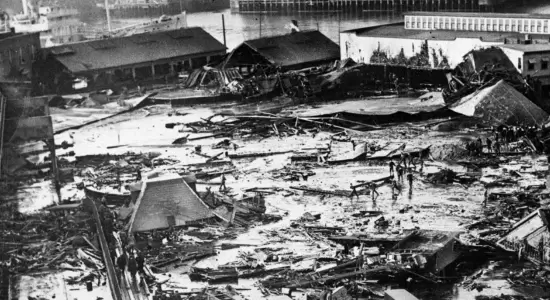
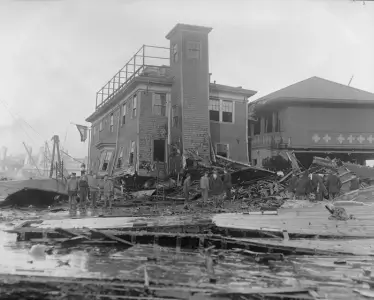
It sounds like a really bad Looney Tunes bit. But it wasn’t. Around noon, this monstrous, half-assed storage tank just exploded. The sound was deafening—locals thought someone was firing off a machine gun in the street. Then came the wave. We’re talking a 25-foot wall of dark brown sludge just tearing down the block at 35 miles per hour. It snapped buildings right off their foundations. Crushed the elevated train tracks. Swallowed horses whole.
When the mess finally settled, 21 people were dead and another 150 were pretty badly mangled. And the wildest part isn’t even that a neighborhood got wiped off the map by pancake syrup. It’s the sheer, unhinged physics that made the 1919 Boston molasses disaster such a lethal trap.
The Sketchy Corporate Greed Behind The Great Molasses Flood
So let’s back up for a second. Why the hell was there a five-story tank of liquid sugar sitting in the middle of a packed residential street? Because of World War I.
Industrial alcohol was huge business back then since it was used to make explosives, and molasses was the cheapest way to brew it. A company called United States Industrial Alcohol (USIA) slapped this giant metal tank together in a massive rush so they could cash in on the war. And they completely botched the job. The steel was way too thin. People literally heard the thing groaning under the pressure, and it leaked so much that neighborhood kids used to run up with cups to catch the free syrup.
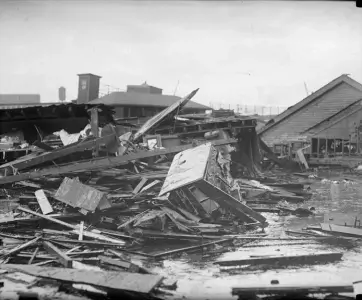
So how did a multi-million dollar corporation fix their ticking time bomb? They painted it brown. Seriously. They just painted it the exact same color as the leaks so nobody would notice. Problem solved, right? At least until a weirdly warm winter day caused all the fermenting gas inside to expand—ripping the cheap rivets right out of the metal.
The Terrifying Science of Drowning in Syrup
When the tank finally gave up the ghost, it wasn’t just a big puddle. It was an absolute fluid dynamics nightmare.
Molasses is what science nerds call a non-Newtonian fluid. Basically, its thickness changes depending on how hard it gets pushed around. When the tank exploded, the sheer force shot the syrup out so fast that it acted almost exactly like raging floodwater—sweeping people off their feet without breaking a sweat. But here is the truly messed up part. The second that wave slowed down and hit people, the January air cooled it off instantly.
It turned straight into quicksand. The harder the victims thrashed around trying to swim out, the tighter they got trapped. Rescue crews were actually getting glued to the people they were trying to save. It was a suffocating, brutal way to go that completely broke the rules of how liquids are supposed to act. Which is exactly what made the 1919 Boston molasses disaster so uniquely horrifying.
The Cleanup and That God-Awful Smell
The aftermath looked like a bomb went off in a candy factory. Firefighters showed up and sprayed regular water on the mess, which basically did nothing. Eventually, they realized they had to pump freezing saltwater straight out of the harbor just to slice through the hardened sludge. It took weeks to find all the bodies. Some poor souls got swept entirely off the docks and just disappeared into the freezing harbor water.
The legal drama was actually a pretty big deal. After dragging it out in court, the company had to pay out massive settlements. It was one of the very first times an American corporation got nailed for gross negligence, and it forced the whole country to rethink how things get built.
But the creepiest detail? The smell. For decades after they supposedly cleaned everything up, locals swore that on really hot, muggy days, the whole North End still reeked of sweet, rotting syrup. Kind of ruins the vibe of making gingerbread cookies, doesn’t it?
Did you know?
Boston isn’t the only city to get hit by a ridiculously gross anomaly. Back in 1876, a super quiet town in Kentucky got pelted by a literal rainstorm of raw flesh. Not a joke. Go read The Bizarre Reason Behind the Kentucky Meat Shower. It’s exactly as nasty as it sounds.
References:
Scientific American — The Science of the Great Molasses Flood
History Channel — The Great Molasses Flood of 1919
Journal of Fluid Mechanics — The Fluid Dynamics of the 1919 Boston Molasses Disaster