
Picture Rome in January, 897 AD. The Basilica of St. John Lateran is packed with elite clergy, everyone sweating through their robes. The air is thick with heavy incense. But it isn’t doing a thing to hide the smell of rotting flesh. Right in the middle of the room, decked out in full papal vestments, sits Pope Formosus. Huge problem, though. Formosus had been dead for about nine months.
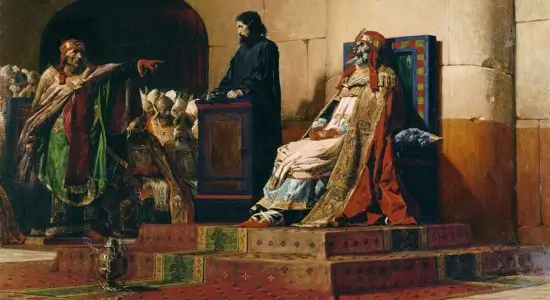
They literally propped a decaying corpse onto a wooden throne to face a room full of his former colleagues. And it gets weirder. The court assigned a terrified young deacon to stand behind the throne and speak on the corpse’s behalf, answering every accusation as if he were Formosus himself. This wasn’t some fever dream or a lost Edgar Allan Poe draft. It was a completely official ecclesiastical trial, convened as a formal synod and ordered by the current pope, Stephen VI.
History books usually gloss over this absolute circus, but it easily ranks as one of the most bizarre moments in papal history. And the wild part is that dragging a dug-up corpse into a courtroom had almost nothing to do with religion or church law. It was, at its core, a brutal piece of political revenge.
The Messy Politics Behind the Cadaver Synod
The 9th century was a brutal era for the papacy. Rome was dominated by powerful aristocratic families who treated the Holy See as a prize worth fighting, bribing, and killing for. Popes were being poisoned, imprisoned, and overthrown with alarming regularity. Survival often meant playing the same ruthless political game everyone else was playing.
Back when Formosus was alive, he made a decision that would haunt his legacy. He sided with a rival faction to secure military protection for Rome, and as part of that arrangement he crowned Arnulf of Carinthia as Holy Roman Emperor—directly undercutting the ambitions of Lambert of Spoleto, whom Formosus had previously crowned as emperor before switching allegiances. This infuriated the powerful Spoleto family. When Formosus died of natural causes in 896, his enemies weren’t satisfied. Once their faction regained control of Rome under the new pope, Stephen VI, they wanted his entire papacy erased from the record.
The Most Unhinged Courtroom Drama in History
Enter Pope Stephen VI. Under heavy pressure from Lambert of Spoleto and his mother Agiltrude, Stephen ordered Formosus exhumed from his grave. They dressed the decomposed body in sacred papal vestments, placed the papal staff in its hand, and propped it upright on the throne for what became one of the most absurd legal proceedings in history.
During the trial, Stephen personally leveled the charges: perjury, illegally acceding to the papacy, and unlawfully holding more than one bishopric at once, since church law at the time forbade a bishop from transferring between dioceses. The young deacon standing behind the throne had to answer every accusation on the corpse’s behalf, in a scene contemporaries described as genuinely horrifying to witness. Having a dead pope put on trial was, in practical terms, a legal maneuver designed to retroactively cancel every ordination, blessing, and official act Formosus had ever performed while pope.
Fun Fact
The Cadaver Synod was so widely condemned that Pope John IX held two separate synods the following year, in 898, specifically to annul the entire trial, restore Formosus’s papacy, and formally ban any future pope from ever putting a corpse on trial again.
The Verdict (and the Instant Karma)
Unsurprisingly, the corpse lost the case. Formosus was found guilty on every charge, and his papacy was retroactively declared invalid, along with every ordination he had performed while in office. The punishments were strikingly petty. They stripped the papal vestments from his rotting frame, dressed him in plain layman’s clothes, and hacked off the three fingers on his right hand that he had used to give blessings.
His mutilated body was buried in a common grave, then later dug up again and thrown into the Tiber River. According to some later, less verified accounts, a mob eventually retrieved the body and reburied it after claiming it had performed miracles while adrift in the water, though historians treat that detail with some skepticism. What’s well documented is that the political fallout was severe: the trial appalled much of Rome, and public anger, combined with ongoing factional resentment, led to an uprising against Stephen just months later. He was seized, thrown into a dungeon, and strangled to death by August 897, less than a year into his own papacy.
If you think that is the darkest chapter of institutional history, medical history has its own horrors that rival it. Imagine having a biological glitch that made you so endlessly starved you’d reportedly eat live animals and street garbage just to survive. Dive into the unsettling true story of the man who literally ate everything.
Conclusion
The whole Formosus fiasco is proof that even the most sacred institutions on the planet weren’t immune to petty, all-too-human political drama. Just a rotting corpse propped up on a throne, standing trial for crimes it could never actually answer for. It’s a stark reminder that the desire for revenge, even against the dead, has rarely needed much of an excuse throughout history.
Britannica — Cadaver Synod
Wikipedia — Cadaver Synod
Medievalists.net — The Cadaver Synod: The Trial of a Dead Pope
Why was Pope Formosus put on trial after he died
His political enemies, the Spoleto family, never forgave him for crowning a rival claimant as Holy Roman Emperor. Once their faction regained influence in Rome under Pope Stephen VI, they pushed for his exhumation and trial to erase his papacy from the record.
What happened to Pope Stephen VI after the trial
The trial provoked widespread public outrage in Rome. Within months, an uprising led to Stephen’s imprisonment, and he was strangled to death in his cell by August 897, less than a year into his papacy.
Was Formosus’s papacy ever restored
Yes. In 898, Pope John IX convened two synods that annulled the Cadaver Synod entirely, restored Formosus’s papal legitimacy, and banned any future trial of a deceased person in church law.
Is the Cadaver Synod the only time a corpse was tried in church history
It stands as the most infamous example in papal history. Because of how disturbing the precedent was, Pope John IX’s 898 ban specifically prohibited the practice going forward, making it very unlikely to have been repeated afterward.