
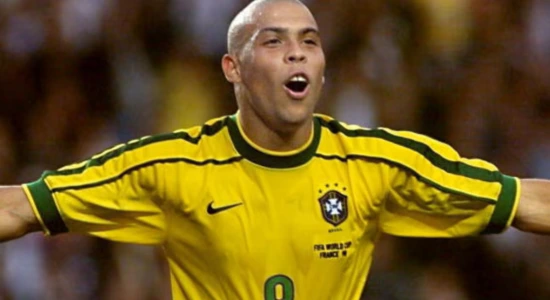
On July 12, 1998, just 72 minutes before the kickoff of the World Cup Final between Brazil and France at the Stade de France, team sheets were handed out to the global press. Instantly, the sports world collectively gasped. Ronaldo Luís Nazário de Lima—the 21-year-old Brazilian phenom, reigning two-time World Player of the Year, and the undisputed face of the tournament—was missing from the starting lineup. Replaced by forward Edmundo, his sudden omission sent absolute shockwaves through the stadium. Then, a mere 45 minutes before the whistle blew, a second team sheet was hastily distributed. Ronaldo was back on it.
When the match finally began, the explosive, unstoppable striker was completely unrecognizable. He sleepwalked through Brazil’s catastrophic 3-0 defeat, colliding heavily with French goalkeeper Fabien Barthez and barely making a dent in the defense. For decades, fans have blamed everything from corporate sabotage by sponsors to intentional food poisoning. But the clinical truth behind this event is far more fascinating than any sports conspiracy theory. To understand the reality of that afternoon at the Château de Grande Romaine hotel, we have to look closely at the crushing biological weight of human stress and the mechanics of emergency medicine.
Decoding The 1998 World Cup Mystery: The Seizure In Room 290
After lunch on the day of the final, Ronaldo retired to his room at Brazil’s team hotel in Lesigny, a quiet suburb of Paris. According to his roommate, legendary left-back Roberto Carlos, Ronaldo suddenly began crying uncontrollably before suffering a violent convulsive fit. He shook violently, foamed at the mouth, and lost consciousness. Teammate Edmundo sprinted down the hall, and team doctors Lidio Toledo and Joaquim da Mata were immediately summoned. By the time the medical staff stabilized him, Ronaldo had fallen into a deep sleep, entirely unaware of what had just happened to his body.
When he woke up, he was rushed to the Lilas clinic in Paris for exhaustive neurological testing. The doctors ran an electroencephalogram (EEG) to check for epilepsy and brain lesions, but the results came back completely normal. With no obvious physical trauma and his heart rate stabilized, the medical staff faced an impossible dilemma. Medically speaking, there was no clinical evidence to stop him from playing, which explains exactly what really happened to Ronaldo when he arrived at the stadium demanding his spot back on the roster.
The Biology Of A Psychogenic Short-Circuit
So, if it wasn’t epilepsy, a stroke, or a heart attack, what caused the world’s greatest athlete to physically collapse? Modern sports cardiologists and neurologists point heavily toward a physiological reaction triggered by unfathomable psychological pressure. Think of the human nervous system like an electrical grid. When it gets overloaded by extreme, sustained anxiety, the brain can effectively trip its own circuit breakers to protect itself. This phenomenon is clinically known as a Psychogenic Non-Epileptic Seizure (PNES).
At just 21 years old, Ronaldo was carrying the expectations of 160 million Brazilians, a multi-million-dollar global Nike sponsorship campaign, and the relentless scrutiny of the world’s media. The immense cortisol and adrenaline flooding his system likely caused a massive neurological misfire. His body physically shut down because his brain simply couldn’t process the stress anymore.
The Medication Misstep
There is another crucial, biological layer to what really happened to Ronaldo that afternoon. To calm his violent convulsions in the hotel room, doctors reportedly administered a powerful sedative, widely believed by medical historians to be a heavy benzodiazepine. While incredibly effective at stopping a seizure, these sedatives act as chemical emergency brakes for the central nervous system. They severely depress motor function, slow reaction times, and cause profound lethargy.
A normal patient is strictly advised not to operate heavy machinery after taking this kind of medication; Ronaldo, however, was asked to outrun the French national team in a global final. When he stepped onto the pitch in Saint-Denis, he was actively fighting the lingering half-life of a heavy central nervous system depressant. It completely explains his sluggish, disoriented performance against Zinedine Zidane’s French squad.
Conclusion
The events of July 12, 1998, were not the result of corporate extortion, espionage, or foul play. They were a stark, medical demonstration of the absolute limits of the human body. The tragedy of that night in Paris wasn’t just that Brazil lost the World Cup; it was that a 21-year-old kid suffered a severe neurological stress response and was medically cleared to play through a chemical haze. Today, the incident stands as a profound historical lesson in sports medicine, reminding us that even the most indestructible athletes on the planet are still bound by their biology.
References:
BBC Sport — The great World Cup mystery
FourFourTwo — What really happened to Ronaldo before the 1998 World Cup Final?
The Guardian — The Ronaldo mystery: what happened to the Brazil striker before the 1998 World Cup final?