
For most of the last century, archaeologists told a fairly tidy story about how humans stopped wandering: farming came first, and settling down followed as a consequence of needing to tend crops. A site tucked into the limestone foothills of southeastern Türkiye is quietly dismantling that timeline. Şika Rika 5 shows people living in the same place, building the same structures, generation after generation, for roughly 2,000 years before anyone in the region planted a single seed.
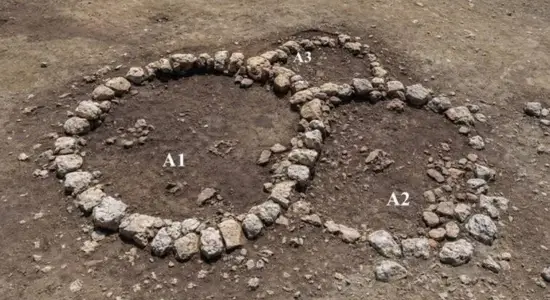 Excavation at Şika Rika 5, Mardin Province, revealing structures dated between 12,000 and 10,000 years old.
 Table of Contents
A Settlement Hiding in Plain Sight
Şika Rika 5 sits in the Tur Abdin region of Mardin Province, an area long overshadowed by the better-known river valleys of the Tigris and Euphrates further south. Archaeologist Ergül Kodaş of Mardin Artuklu University led the excavation, dating the site to between 12,000 and 10,000 years ago, a stretch spanning the tail end of the Epipalaeolithic and the beginning of the Pre-Pottery Neolithic. The full findings were published in the journal Antiquity in 2026.
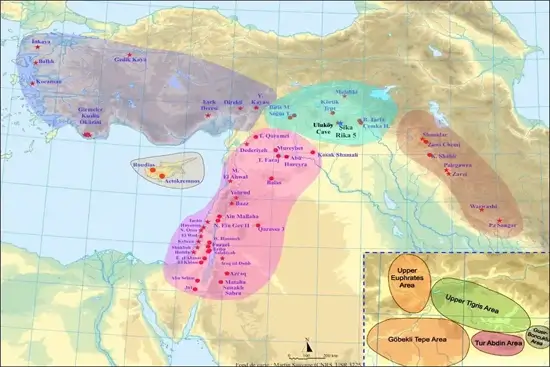 Şika Rika 5 is located in the Tur Abdin region of Mardin Province, southeastern Türkiye.
That date range puts Şika Rika 5 right at one of the most consequential turning points in human history: the shift from mobile, hunting-and-gathering bands to communities that stayed put. What makes the site unusual isn’t just its age, it’s the physical evidence of permanence. The settlement was built on an artificial mound, known locally as a höyük, formed by successive layers of habitation stacked on top of each other over centuries, the same kind of gradual buildup you’d expect from a community that kept rebuilding on the same spot rather than moving on.
Tools, Trade Routes, and Circular Homes
Excavators uncovered clear circular structures at the site, likely the remains of long-term dwellings rather than temporary camps. The artifact assemblage tells an even more detailed story about daily life. Stone tools made primarily from flint dominate the collection, but researchers also recovered obsidian, a volcanic glass that doesn’t occur naturally anywhere near Mardin Province. Its presence means the people at Şika Rika 5 were trading with communities much further away, part of an exchange network that connected settlements across considerable distances.
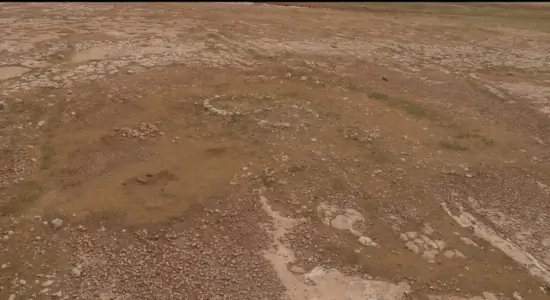 Circular structures uncovered at Şika Rika 5, believed to be long-term dwellings rather than temporary camps.
Among the flint tools, small, precisely shaped pieces called lunates stand out. These crescent-shaped implements were fitted into composite tools like knives or projectile points, and their sheer abundance at the site points to a genuinely sophisticated toolmaking tradition, not a crude or transitional one. Grinding stones and pestles recovered alongside them suggest inhabitants were already processing wild cereals and legumes well before anyone domesticated those same plants. Ornamental beads found at the site hint at something beyond pure survival: symbolic or social practices that mattered enough to the community to spend time crafting.
Fun Fact
All artifacts recovered from Şika Rika 5 are currently housed at the Mardin Museum, where researchers continue to study the collection alongside material from other sites in the same regional cluster.
Şika Rika 5 Wasn’t Working Alone
Perhaps the most striking detail in Kodaş’s findings isn’t the site itself, it’s what surrounds it. Regional surveys conducted since 2022 have identified at least 20 other prehistoric settlements within a few hundred meters of Şika Rika 5, all built on similar mounds, all occupied during overlapping periods. This wasn’t a single isolated group experimenting with settled life in a vacuum. It was a dense cluster of communities apparently making the same fundamental shift around the same time.
Şika Rika 5 belongs to a small category of discoveries that force historians to rethink not just what happened, but when and why. The Antikythera Mechanism, a 2,000-year-old Greek device precise enough to track celestial cycles, is another example of ancient people being credited with far less sophistication than the physical evidence actually supports.
The same pattern shows up in Britain, where the Iron Age hoard discovered in Melsonby forced historians to reassess how wealthy and powerful northern British elites really were two thousand years ago. And even something as mundane as a piece of ancient homework, like the 4,000-year-old Babylonian clay tablet showing a student’s graded math mistake, keeps proving that early civilizations were more organized, and more human, than the historical record usually gives them credit for.
The broader region of southeastern Anatolia already had a reputation for this kind of surprise. Nearby sites like Göbekli Tepe and Boncuklu Tarla had already shown that complex social organization existed earlier than researchers once assumed. Şika Rika 5 adds density to that picture: not just one outlier site, but a whole neighborhood of them, active during the exact window when sedentary life was supposedly still a novel idea.
Why This Undoes a Textbook Assumption
The conventional model treats farming as the cause of settled life and permanent settlement as its effect. Şika Rika 5 suggests the sequence, at least in this region, may have run the other way. People appear to have formed semi-permanent or fully permanent communities first, sustained by intensive use of locally available wild resources, hunting, gathering, and early plant processing, well before agriculture entered the picture as a formal practice.
If that sequence holds up under further study, it reframes sedentism not as a byproduct of farming but as a separate development that farming later attached itself to. That’s a meaningfully different story about why humans stopped moving, and Şika Rika 5, sitting quietly in a stretch of Anatolia that archaeologists had mostly overlooked, is currently one of the best pieces of physical evidence for it.
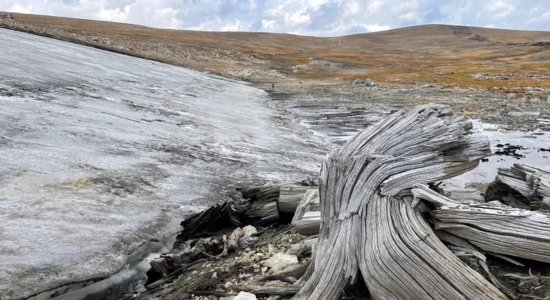
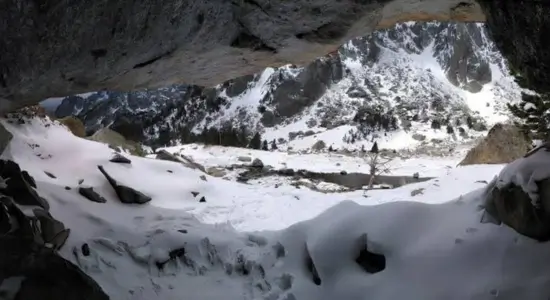
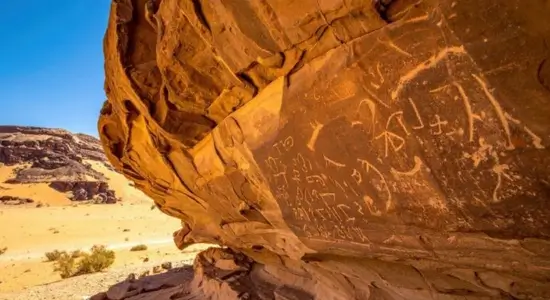
This is one of five discoveries featured in 10,000-Year-Old Discoveries That Rewrote History in 2026, covering finds from Egypt, Siberia, the Pyrenees, and the melting ice near Yellowstone.
Mardin Artuklu University — Şika Rika 5 Field Research
HeritageDaily — 10,000-Year-Old Settlement Challenges Traditional Views on the Origins of Sedentary Life
What is Şika Rika 5
Şika Rika 5 is a prehistoric settlement in Mardin Province, southeastern Türkiye, dated to between 12,000 and 10,000 years ago. Excavated by archaeologist Ergül Kodaş, it shows evidence of long-term habitation, trade, and toolmaking before agriculture was established in the region.
Why is Şika Rika 5 significant for understanding human history
The site suggests people were living in semi-permanent or permanent communities before farming existed, challenging the traditional assumption that settled life only began after agriculture was adopted. It’s supported by nearby sites like Göbekli Tepe showing similarly early social complexity.
What artifacts were found at Şika Rika 5
Excavators recovered flint tools including small crescent-shaped lunates, obsidian sourced from distant regions, grinding stones and pestles used for processing wild plants, and ornamental beads suggesting symbolic or social practices among the site’s inhabitants.
Is Şika Rika 5 the only site of its kind in the area
No. Surveys since 2022 have identified at least 20 additional prehistoric settlements within a few hundred meters of Şika Rika 5, suggesting a dense regional cluster of communities transitioning to sedentary life around the same time, rather than a single isolated case.