
On the morning of December 1, 1948, a jeweler named John Lyons was walking along Somerton Beach in Adelaide, Australia, when he spotted a well-dressed man slumped against a seawall. The man was dead, but there was no blood, no sign of a struggle, and nothing obviously wrong with his body. He looked as though he had simply fallen asleep while looking out at the ocean; a half-smoked cigarette rested on his collar, and an unlit one was tucked casually behind his ear. But when police arrived to identify the body, they quickly realized this was no ordinary tragedy.
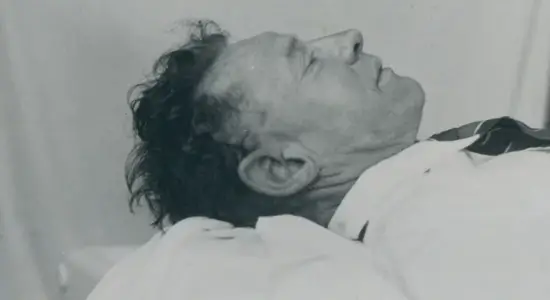
Every single piece of identification had been intentionally stripped from the man. His wallet was missing, and the manufacturer’s tags on his suit, shirt, and tie had been snipped off with scissors. His pockets held only everyday items: an aluminum comb, a pack of Juicy Fruit gum, a box of Bryant & May matches, and a couple of transit tickets. This total erasure of identity sparked what would become one of the most baffling forensic mysteries of the 20th century. For over seven decades, authorities and armchair detectives chased ghosts, convinced they were dealing with an assassinated Cold War spy.
The Autopsy And The Suitcase Of The Somerton Man
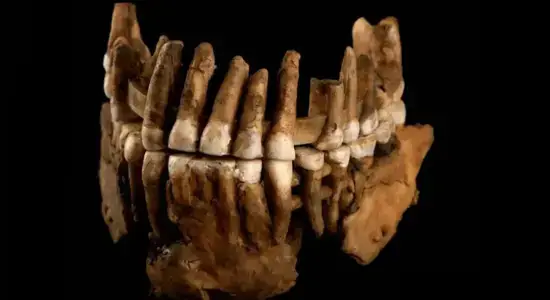
When pathologists examined the body, the biological clues pointed to something deeply unnatural. The man was in peak physical condition, with highly defined calf muscles resembling those of a ballet dancer or long-distance runner, but his internal organs were in a state of crisis. His spleen was massively enlarged, and his stomach contained pooled blood, leading the coroner to suspect a fast-acting, undetectable poison—like digitalis or strophanthin. However, toxicology reports came back completely clean. The man had seemingly died of something mid-century science simply couldn’t trace.
The plot thickened weeks later when investigators located a brown suitcase abandoned at the Adelaide Railway Station luggage room, checked in the day before the body was found. Inside, they found a stencil brush, an electrician’s screwdriver, and a distinctive orange Barbour wax thread used to repair the dead man’s trousers. But just like his clothes, the tags on almost every item in the suitcase had been deliberately removed. The intense effort to erase this man’s identity fueled the theory that the bizarre cold case of the Somerton Man was an international espionage operation gone fatally wrong.
The “Tamam Shud” Cipher And The Local Nurse
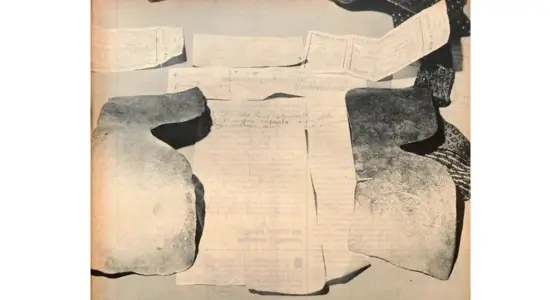
The investigation skyrocketed from a strange local death to an international obsession when a pathologist re-examined the man’s clothing months later. Sewn deep inside a hidden fob pocket in his trousers was a tightly rolled scrap of paper. Printed on it were two Persian words: Tamam Shud, meaning “It is ended.” The scrap had been torn from a rare edition of The Rubaiyat of Omar Khayyam, a 12th-century book of poetry.
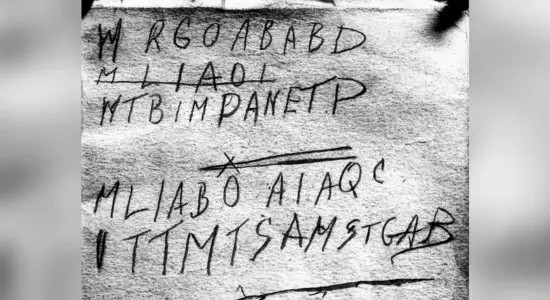
Incredibly, police tracked down the exact book the scrap was torn from. It had been tossed into the back seat of an unlocked car parked near Somerton Beach. On the back cover, investigators found faint pencil markings revealing a cryptographic code and the unlisted phone number of a local nurse named Jessica Thomson. Thomson lived just a few hundred yards from where the body was found. When police showed her a plaster bust of the dead man, she reportedly looked completely terrified but firmly denied knowing him. For decades, the cipher and the nurse’s silence anchored the theory that the bizarre cold case of the Somerton Man involved Soviet spy rings and encrypted secrets.
How 21st-Century DNA Finally Solved The Mystery
While the world spent seventy years speculating about espionage, the truth was quietly waiting in human biology. In 2022, Professor Derek Abbott from the University of Adelaide, working alongside renowned American forensic genealogist Colleen Fitzpatrick, achieved what 20th-century detectives could not. They managed to extract viable DNA from tiny hairs trapped in the plaster death mask that police had made of the man’s face back in 1949.
Using the same advanced genetic genealogy techniques utilized to catch modern serial killers, Abbott’s team built a complex family tree out of the DNA data, tracing it through 4,000 people. On July 23, 2022, they finally gave the man his name back: Carl “Charles” Webb. Webb was not a glamorous international superspy. He was an electrical engineer and instrument maker from Melbourne. He had a fondness for poetry, a history of marital disputes, and a known habit of wandering off.
Conclusion
The revelation of Charles Webb’s identity proves that reality is often much more grounded, and far more tragic, than the spy thrillers we invent. The removed tags, the secret pockets, and the strange codes weren’t the hallmarks of an elite intelligence agent, but rather the desperate, erratic actions of a deeply troubled man at the end of his rope. While we may never know the exact chemical mechanism that stopped his heart on that Australian beach in 1948, modern science finally stripped away the mythology, returning a stolen identity to the most famous ghost of the Cold War.
Real life is always stranger than fiction.
The Somerton Man proves that history’s most baffling puzzles aren’t found in spy novels—they happen right here in the real world. If you are captivated by cryptic codes, unsolved cases, and historical anomalies, keep the investigation going. Dive into our archives to uncover more mind-bending true stories, bizarre historical deep dives, and endless Mystery Fun that will keep your inner detective busy.
References:
Smithsonian Magazine — The Somerton Man Mystery, Solved At Last
CNN — Who was the Somerton Man? DNA solves 73-year-old Australian mystery
BBC News — Somerton man: The mystery of a body on an Australian beach