
On January 4, 2012, an anonymous user posted a simple, unsettling image on the notorious /x/ (paranormal) imageboard of the website 4chan. The image featured stark white text over a pitch-black background, accompanied by a picture of a cicada moth. The message read: “Hello. We are looking for highly intelligent individuals. To find them, we have devised a test. There is a message hidden in this image. Find it, and it will lead you on the road to finding us. We look forward to meeting the few that will make it all the way through. Good luck. 3301.”
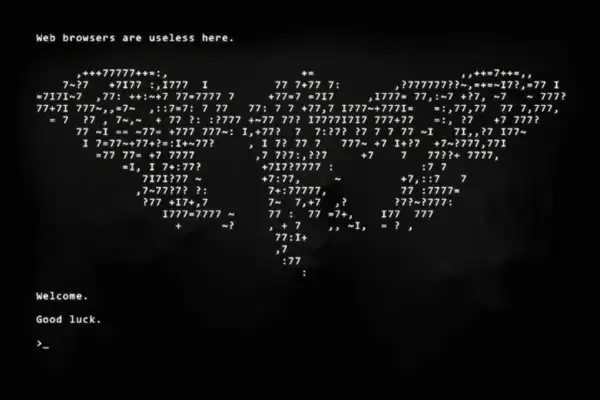
What started as a seemingly standard cryptography challenge quickly mutated into a global obsession. To crack the hidden codes, participants had to possess an insane breadth of knowledge, ranging from obscure medieval literature like The Mabinogion and the poetry of William Blake, to advanced prime number mathematics and digital steganography. Thousands of hackers, academics, and curious minds collaborated to decipher the clues, realizing they had stumbled into the most mysterious internet scavenger hunt in human history. Yet, over a decade later, the true architects behind the puzzle remain entirely unknown.
The Cryptographic Mechanics of Cicada 3301
To understand how complex this puzzle was, you have to look at the mechanics of digital concealment. The first clue relied on a technique called steganography—the practice of hiding secret data within the code of an ordinary, non-secret file. It is the digital equivalent of etching a microscopic treasure map onto a single grain of sand and hiding it on a public beach.
Joel Eriksson, a 34-year-old Swedish cryptosecurity researcher, was one of the first experts to jump down the rabbit hole. By opening the original Cicada image file in a standard text editor, Eriksson discovered a hidden string of readable text buried in the image’s code. This text contained a decryption cipher that eventually pointed to a URL. But clicking the link didn’t provide answers; it simply displayed a picture of a wooden duck with the message, “Whoops, just decoys this way.” The puzzle was aggressively filtering out amateurs, demanding that solvers extract data using a highly specific, open-source steganography tool called OutGuess.
A Global Hunt in the Physical World
The defining moment of the Cicada 3301 phenomenon occurred when the puzzle aggressively broke out of the internet and into the physical world. Weeks into the 2012 challenge, solvers decoded a message that produced a list of 14 specific GPS coordinates. The hunt was no longer confined to chat rooms; it required boots on the ground.
Within 24 hours, participants rushed to the coordinates and discovered physical posters plastered to telephone poles and streetlamps in cities across the globe. These included locations in Seattle, Washington; Paris, France; Warsaw, Poland; and Seoul, South Korea. Each poster featured the iconic cicada logo and a QR code leading to the next encrypted website. This perfectly coordinated, simultaneous global drop proved that Cicada 3301 was not a lone teenager in a basement. It was a well-funded, highly organized international network with physical operatives scattered across multiple continents.
The Darknet and the Chosen Few
For those brilliant and obsessive enough to follow the breadcrumbs, the physical QR codes eventually led to an encrypted address on the TOR network (the dark web). Marcus Wanner, a 15-year-old high school student from Virginia, was part of a small, elite group of solvers who actually reached the finish line of the 2012 puzzle.
However, the gates closed quickly. Once the first wave of solvers arrived, the site abruptly shut down, displaying a message that stated: “We want the best, not the followers.” Wanner later revealed that the “winners” were ushered into a private darknet forum where they were interviewed by anonymous administrators. According to Wanner, Cicada 3301 claimed to be an international think tank dedicated to internet privacy, cryptography, and freedom of information. They allegedly tasked the winners with building encrypted software for whistleblowers. But after a year of development, the group’s communication simply faded into dead silence.
The Liber Primus Legacy
Cicada 3301 returned with new puzzles in January 2013 and January 2014, with the final iteration introducing the Liber Primus (First Book). This was a massive, 58-page manifesto written entirely in a complex, runic alphabet designed by the creators.
While the brightest cryptographic minds on the internet have successfully translated a few pages—revealing philosophical musings on the nature of reality and human consciousness—the vast majority of the book remains completely undeciphered. The Liber Primus stands as the ultimate cryptographic graveyard, leaving the most mysterious internet scavenger hunt technically unresolved to this day. Whether Cicada was a recruitment tool for the NSA, a cybersecurity firm’s elaborate test, or just a brilliant group of privacy activists, they succeeded in creating a modern legend written in unbreakable code.
The internet isn’t the only place hiding massive, unsolved puzzles. If the encrypted world of Cicada 3301 fascinated you, wait until you explore the mysteries unfolding right above us. Discover why astronomers are currently baffled by the 2026 “Wow!” Signal 2.0, or dive into classified intelligence files to uncover what the State Department was actually tracking with the secret Global UAP Network. The truth is out there—you just have to know where to look.
References:
Fast Company — Meet The Man Who Solved The Mysterious Cicada 3301 Puzzle
Rolling Stone — Cicada: Solving the Web’s Deepest Mystery
The Telegraph — Cicada 3301: The Internet’s most mysterious puzzle