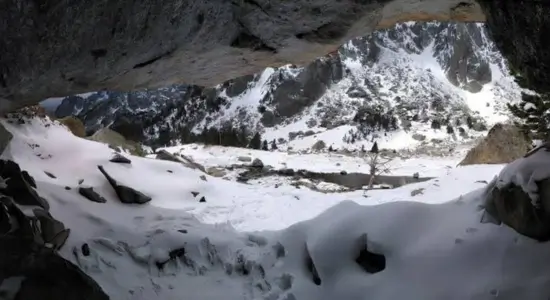

Imagine a small community of ancient humans living entirely cut off from the rest of the world for longer than the entirety of recorded human history. In 2015, archaeologists excavating Grotte Mandrin—a well-studied cave system in the Rhône Valley of southern France—unearthed the fossilized remains of an adult male Neanderthal. They nicknamed him “Thorin” after the dwarven king from J.R.R. Tolkien’s The Hobbit, a fitting moniker for a hominin who represents the very end of his ancient lineage. For nearly a decade, researchers carefully extracted his bones and 31 teeth from the dirt, assuming they had simply found another standard late-stage Neanderthal who lived around 42,000 to 45,000 years ago during the freezing final chapters of the Ice Age.
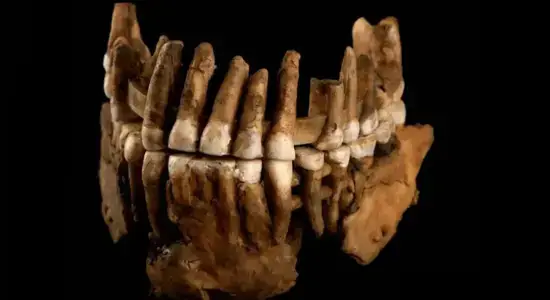
Image courtesy of Xavier Muth
However, when a team of geneticists finally sequenced Thorin’s DNA in September 2024, the results completely rewrote what archaeologists thought they knew about our extinct cousins. Despite living at the very end of the Neanderthal timeline, Thorin’s genetic code looked incredibly archaic, closely resembling early Neanderthals from over 105,000 years ago. The genomic data revealed an astonishing reality: Thorin belonged to a small population that had completely severed all contact with the outside world. For 50,000 staggering years, they existed in a genetic time capsule, completely ignoring other human populations that lived just a few days’ walk away.
The Mechanics of Extreme Isolation
At first, researchers assumed there was an error with the geological dating. How could a Neanderthal from 42,000 years ago possess DNA that was nearly 60,000 years out of date? To solve this temporal riddle, researchers analyzed the chemical isotopes locked inside Thorin’s fossilized teeth—which intriguingly included rare, extra molars. Isotopes act like a biological weather report, revealing the specific climate a creature lived in. The analysis confirmed that Thorin drank water from a freezing, Ice Age environment, proving beyond a shadow of a doubt that he was indeed a late Neanderthal.
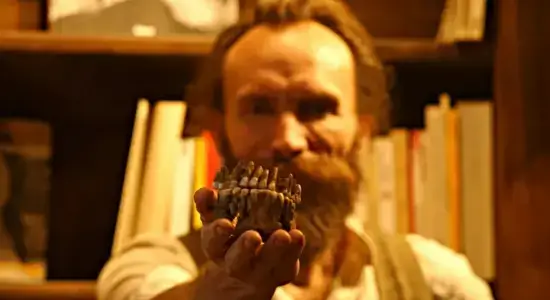
This meant that his bizarre DNA wasn’t a dating error; it was the result of extreme genetic seclusion. According to Ludovic Slimak, a paleoanthropologist at the University of Toulouse and the co-first author of the study published in Cell Genomics, this divergence is massive. To put it in perspective, 50,000 years of genetic separation is the equivalent of the evolutionary distance between a wild wolf and a domestic dog. This group of isolated cave-dwelling Neanderthals spent 50 millennia locked in their own specific territory, completely refusing to interbreed or exchange culture with classic European Neanderthals.
A Biological Warning Sign
In the world of evolutionary biology, long-term isolation is almost always a death sentence. To survive changing climates and deadly pathogens, populations need genetic diversity. When a community of isolated cave-dwelling Neanderthals stops mixing with outsiders, they are forced to inbreed, drastically shrinking their gene pool and limiting their ability to adapt.
Martin Sikora, a population geneticist at the University of Copenhagen, noted that Thorin’s genome showed severe signs of recent inbreeding. When comparing Thorin’s DNA to other known fossils, the closest genetic match wasn’t found in nearby France, but over 1,700 kilometers away in Gibraltar. While Homo sapiens were constantly migrating, networking, and exchanging genes—even interbreeding with classic Neanderthals—Thorin’s population stayed stubbornly put. They didn’t even cross the nearby Rhône River, despite it being frozen and easily traversable for much of the year. This extreme insularity made them terrifyingly vulnerable when the climate rapidly shifted and Homo sapiens began pouring into Europe in massive numbers.
Redefining the Mystery Of Thorin
The most baffling aspect of this discovery isn’t just the genetics; it’s the psychology. Other classic Neanderthal populations were living just a 10-to-14-day walk away from Grotte Mandrin. Yet, for 50,000 years, these two groups existed side-by-side in Europe while completely ignoring each other’s existence.
Slimak pointed out that this level of disconnection would be unimaginable for Homo sapiens, who are biologically hardwired to explore, socialize, and connect with neighboring tribes. The reality of Thorin’s lineage suggests that Neanderthals fundamentally perceived their world in a wildly different way than we do. They weren’t a single, monolithic block of cavemen spreading across Eurasia. Instead, they were highly fractured, insular communities that preferred to stay exactly where they were.
Conclusion
The discovery of Thorin rewrites the final chapter of the Neanderthal extinction story. It strongly suggests that our ancient cousins didn’t just die out in a dramatic, sudden clash with modern humans. Instead, their demise was likely a slow, quiet fade, driven by small populations that simply refused to adapt or network. Thorin, much like his literary namesake, was the last king of a fading people, holding down the fort in a freezing cave while the rest of the world moved on without him.
The universe is always stranger than fiction. Craving more mind-bending science, unsolved mysteries, and unbelievable realities? Dive into the weirdest corners of our world and explore top-tier deep dives right here at FactFun.co
References
Smithsonian Magazine — Ancient DNA Reveals Neanderthal Group Was Isolated for 50,000 Years
Cell Genomics — Long genetic and social isolation in Neanderthals before their extinction
IFLScience — The Mystery Of Thorin: For 50,000 Years, A Cave-Dwelling Population Of Neanderthals Stayed Isolated From Their Peers