
Imagine moving into an apartment that belonged to someone from an entirely different species, and instead of redecorating, you kept everything exactly the way they left it—down to the jewelry on the nightstand. That is precisely the biological and cultural reality archaeologists have uncovered inside Üçağızlı II, a limestone cave located on the Mediterranean coast of Türkiye. About 77,000 years ago, a group of Neanderthals claimed this cave as their home, bringing with them their own specific survival strategies, hunting techniques, and symbolic traditions. They occupied the shelter for roughly 18,000 years before mysteriously vanishing.
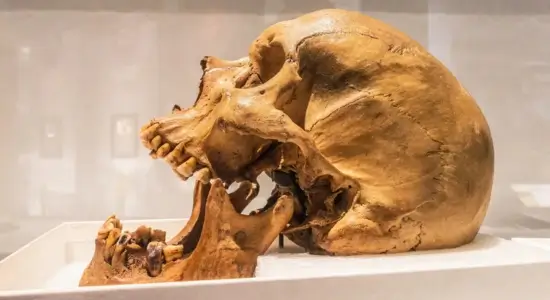
When anatomically modern Homo sapiens eventually moved into the exact same cave between 59,000 and 47,000 years ago, something baffling happened. Instead of introducing new, advanced technologies or fundamentally different behaviors, these new human residents simply continued the exact same lifestyle as their predecessors. For a staggering 30,000-year span across both occupations, these two distinct hominin species utilized identical stone tools, hunted the same prey, and even wore the same type of seashell jewelry. This profound level of continuity completely challenges the old assumption that modern humans immediately outclassed Neanderthals upon arriving in Eurasia.
Unearthing The Secrets Of Üçağızlı II
To understand this unprecedented level of behavioral overlap, we have to look at what was physically left behind in the dirt. Researchers excavating the multiple occupation layers at Üçağızlı II made a massive haul: six prehistoric teeth, a partial jawbone, 19,252 stone tools, and 24,236 animal remains. By identifying the specific hominin fossils, researchers successfully mapped the timeline, proving that Neanderthals lived there from 77,000 to 59,000 years ago, followed directly by modern humans from 59,000 to 47,000 years ago.
According to Professor İsmail Baykara from Gaziantep University, the lead author of the study published in the Proceedings of the National Academy of Sciences, the distribution of the artifacts was shocking. When archaeologists examine other overlapping sites, like the Mandrin Cave in France, they typically find glaring differences in the types of tools used by the two species. But at Üçağızlı II, the thousands of stone tools and butchered animal bones looked virtually identical across all the layers. It was clear that both groups were utilizing the exact same foraging, hunting, and toolmaking strategies to survive on the Turkish coast.
Why Neanderthals And Humans Living In A Cave In Türkiye Shared The Same Culture Through Seashells
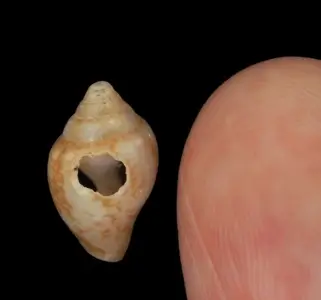
Finding similar hunting tools is one thing, but the most astonishing evidence of a shared lifestyle came in the form of 59 tiny mollusk shells. Of those shells, 29 belonged to a specific marine gastropod called Columbella rustica. These tiny sea snails are practically useless for eating. Instead, prehistoric hominins primarily used them for symbolic ornamentation—essentially stringing them together to make decorative necklaces or jewelry.
Because these specific decorative shells were found scattered consistently across both the older Neanderthal layers and the younger Homo sapiens layers, it points to something much deeper than just basic survival. Finding that they shared the same cave culture, which extended all the way to non-utilitarian, symbolic behaviors, proves that these two groups possessed similar levels of cognitive complexity. They didn’t just hunt the same way; they decorated themselves the same way.
The Mechanics of Ancient Cultural Exchange
How did two different species end up acting exactly the same for 30,000 years? The answer lies in geography. The Levant—which includes the southern region of Türkiye where Üçağızlı II is located—was essentially the ultimate prehistoric crossroads. As modern humans migrated out of Africa, this region served as a major geographical bottleneck where they inevitably collided with the Neanderthal populations that already lived in Eurasia.
We already know from modern genetic testing that these two groups were actively interbreeding in this exact region. Baykara suggests that just as they were exchanging genes, they were also heavily exchanging ideas. Because they were living in such close proximity, they actively observed, learned from, and adopted each other’s habits. The fact that they shared the same cave culture so heavily was the direct result of a thousands-of-years-long cultural exchange program between our ancestors and their closest evolutionary cousins.
Conclusion
The discoveries at Üçağızlı II force us to rethink the story of human evolution. Neanderthals are often unfairly characterized as slow, brutish cavemen who were quickly replaced by the smarter, more cultured Homo sapiens. However, the 30,000-year timeline in this Turkish cave proves that our ancient cousins were culturally sophisticated enough to establish a way of life that modern humans found perfectly suited for their own survival. They didn’t just share a cave; they shared a deeply rooted understanding of the world around them.
The past is never as simple as the history books make it seem. If this 30,000-year-old prehistoric roommate situation left you wanting more, our ancient world has plenty of other baffling mysteries waiting to be unearthed. Keep exploring the weirdest corners of human evolution and dive into more mind-bending history facts, fun deep dives, and unbelievable discoveries right here.
References:
Proceedings of the National Academy of Sciences — Middle Paleolithic human occupations and the Middle to Upper Paleolithic transition at Üçağızlı II Cave, Turkey
Live Science — Neanderthals and modern humans may have shared culture 59,000 years ago in Turkey, study finds
IFLScience — Neanderthals And Humans Living In A Cave in Türkiye Shared The Same Culture For 30,000 Years