
Picture the harsh, unforgiving sands of the Taklamakan Desert in Xinjiang, China. Back in 2003, archaeologists excavating the Xiaohe Cemetery stumbled upon a massive Bronze Age burial site featuring hundreds of mummies buried in upside-down wooden boats. Thanks to the brutally dry, salty environment, these bodies were remarkably preserved. But when researchers led by the Xinjiang Cultural Relics and Archaeology Institute examined one specific mummy known as the “Beauty of Xiaohe,” they noticed something incredibly strange. Scattered across her neck and chest were mysterious, pale yellow clumps that initially looked like strange jewelry or some kind of decayed organic paste.
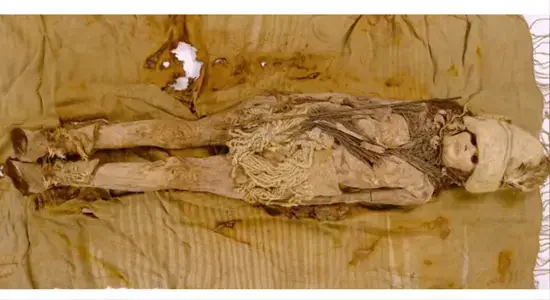
It took advanced paleogenomic testing to figure out what those weird clumps actually were, and the answer was entirely unexpected: dairy. Specifically, it was cheese dating back to roughly 1615 BC. Finding food offerings in ancient tombs isn’t a new concept—pharaohs packed honey and wheat for the afterlife in Egypt—but finding perfectly preserved dairy is a biological miracle. It turns out that the Xiaohe people didn’t just figure out a way to survive in a harsh desert; they were accomplished cheesemakers who valued their fermented snacks so much that they packed them for eternity.
How The Oldest Cheese Ever Found Survived For Millennia
Cheese is essentially just controlled spoilage, meaning it usually rots away completely within a few months if exposed to the elements. So, how did this Bronze Age snack survive? You can thank the extreme geography of the Tarim Basin. The soil at the Xiaohe site is intensely salty, and the environment is exceptionally arid. When the mummies were buried in their cowhide-wrapped boat coffins, the desert air essentially freeze-dried the organic material inside, acting like a giant, moisture-sucking vacuum sealer.
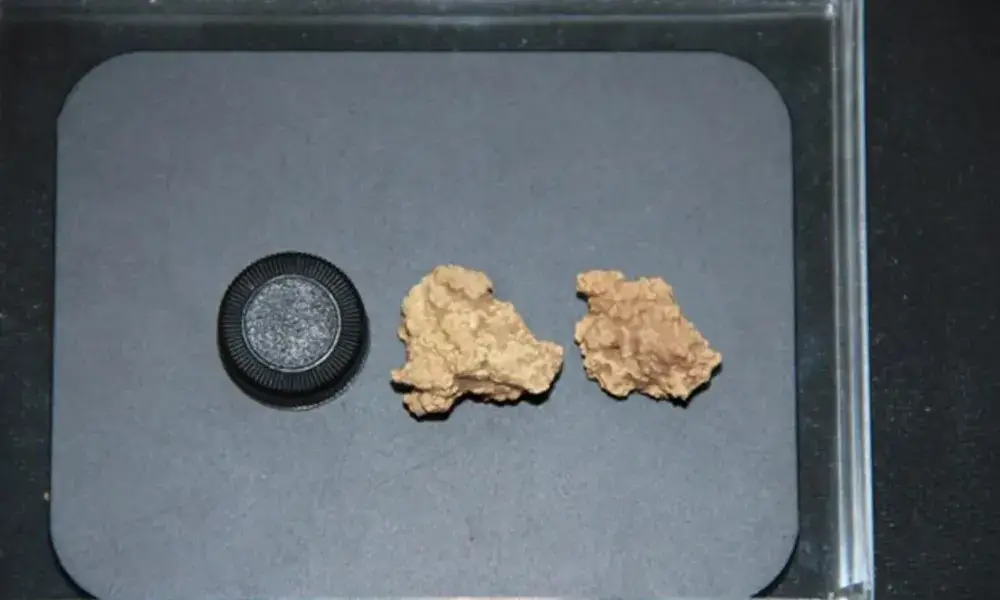
In September 2024, a team led by Qiaomei Fu, a paleogeneticist at the Institute of Vertebrate Paleontology and Paleoanthropology in Beijing, managed to extract and sequence mitochondrial DNA from these pale clumps. Her team successfully identified cow and goat DNA, proving that these ancient people were managing mixed herds. More importantly, they recovered the DNA of the microbes responsible for turning that milk into solid food.
A Recipe From The Bronze Age: Kefir, Not Cheddar
If you were hoping this was a millennia-old block of sharp cheddar, you might be disappointed. The DNA analysis revealed that this wasn’t cheese made using animal rennet, which is how most hard cheeses are made today. Instead, this was a 3,600-year-old kefir cheese.
The ancient people of Xiaohe used kefir grains—a symbiotic culture of lactic acid bacteria and yeast—to ferment milk. Fu’s team specifically identified Lactobacillus kefiranofaciens, the exact same bacterial species used to make kefir today. This was a massive discovery because it pushed the timeline of kefir fermentation back by thousands of years. It also revealed that this specific strain of bacteria evolved and spread through ancient trade routes across Asia, acting as a microscopic hitchhiker alongside human migration.
The Ultimate Snack For The Afterlife
Placing 3,600-year-old kefir cheese on the chest of the deceased wasn’t a random act. In the Bronze Age Tarim Basin, being able to consume dairy safely was a massive survival advantage. At the time, widespread lactose tolerance hadn’t fully developed in adult populations. By fermenting milk into kefir, the Xiaohe people significantly reduced the lactose content, turning a potentially stomach-upsetting liquid into a dense, storable, and highly nutritious calorie source.
Because of the effort required to herd livestock and ferment the milk in such a harsh climate, this cheese was likely considered a premium commodity. Offering it to the dead, particularly by placing it directly on their bodies, highlights how vital this food was to their culture and survival. It wasn’t just sustenance; it was a luxury item meant to nourish their ancestors in the next life.
Conclusion
Humanity’s connection to its past is often told through pottery shards and rusted swords, but the biological engineering required to maintain a symbiotic kefir culture over generations takes serious skill. The fact that a modern geneticist in a high-tech lab could sequence a microbial culture crafted by a Bronze Age herder is nothing short of incredible. It proves that while empires fall and languages die, humanity’s love for a good slice of cheese is truly eternal.
Unearth More Ancient Mysteries…
If you thought perfectly preserved Bronze Age cheese was a mind-blowing archaeological find, the past has plenty of other bizarre secrets waiting in the dirt.
- Did you know that in Italy, a Neanderthal fell down a sinkhole and was trapped for so long that his skeleton literally fused with the limestone? Experience the terrifying, claustrophobic history of The Man Who Became a Cave: The Terrifying Fate of the Altamura Prisoner.
- What happens when researchers dig up an item that completely shatters our timeline of early human intelligence? Find out in The “Impossible” Artifact: Why This 480,000-Year-Old Bone Tool Shouldn’t Exist.
Keep digging into the weirdest corners of history on FactFun.co… because the ancient world is always stranger than we think.
References:
Cell — Bronze Age cheese reveals human-Lactobacillus interactions over evolutionary history
Nature — World’s oldest cheese reveals origins of kefir
Smithsonian Magazine — Scientists Extract DNA From 3,600-Year-Old Cheese Found Alongside Mummies in China