

Meet the Sea Cucumber, the Strange-Looking Creature Nicknamed “Gold of the Sea”
It doesn’t have eyes. It doesn’t have limbs. It’s basically a mouth, an anus, and a bag of organs in between. And yet a single kilogram of the right sea cucumber species can sell for up to $3,500, more than a thousand times what a supermarket vegetable cucumber costs. So what turns one of the ocean’s least glamorous animals into a luxury commodity people are willing to risk their lives for?
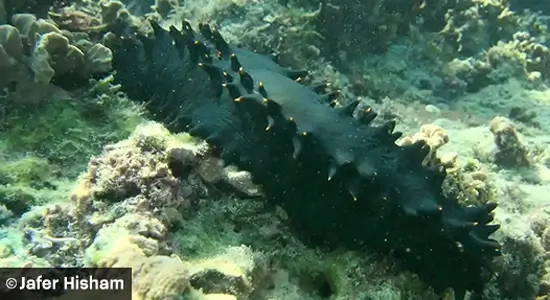
Table of Contents
What Exactly Is a Sea Cucumber
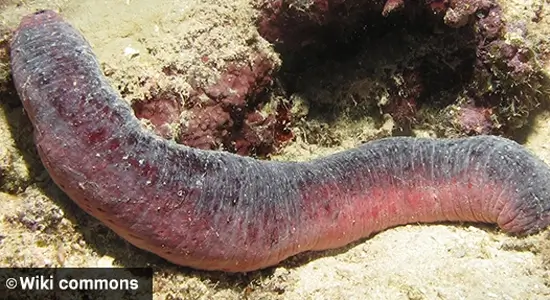
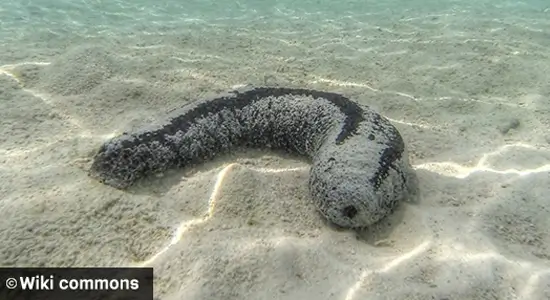
Sea cucumbers are marine invertebrates, distant relatives of starfish and sea urchins, with roughly 1,250 known species living in oceans worldwide. Sizes range dramatically, from tiny 2-centimeter species to giants stretching close to 1.8 meters long. They turn up everywhere from shallow coastal shallows to the deepest ocean trenches, and as a rule, the deeper and rarer the species, the higher its price tag once it reaches a plate.
Why Sea Cucumbers Matter to Coral Reefs
Long before anyone puts a price on them, sea cucumbers are doing quiet, essential work on the seafloor. As they feed, they excrete nitrogen, ammonia, and calcium carbonate, compounds that happen to be key building blocks for coral reef structure. Their waste is also notably high in pH, which helps neutralize the ocean acidification driven by human carbon emissions. In a very literal sense, sea cucumbers are cleaning up part of the mess we’re making.
Why It’s Called the Gold of the Sea
The demand story starts in East Asia, where sea cucumbers have been prized for centuries as a nutrient-dense delicacy, historically reserved almost exclusively for the wealthy and the ruling class. That changed in the 1980s, when China’s economic boom created a much larger middle class with money to spend on what had previously been an elite luxury. Demand exploded, and prices climbed with it.
Marine biologist Steven Purcell, one of the world’s leading sea cucumber researchers, has pointed out an odd detail about what actually drives the price: the spikier the animal looks, the more it’s worth. That rule puts the Japanese sea cucumber at the top of the market, selling for as much as $3,500 per kilogram, ahead of other prized varieties like the Golden Sandfish and Dragonfish. Between 2011 and 2016 alone, average global prices rose almost 17 percent, and the trade has since spread to dozens of new exporting countries, growing from just 35 nations in 1996 to 83 by 2011.
Fun Fact
The sea cucumber trade has turned dangerous in places where deep-water diving regulations are thin. In Mexico’s Yucatan Peninsula alone, at least 40 divers have died searching for high-value specimens, many from decompression sickness after diving too deep, too fast, chasing rarer and more expensive catches as shallow populations get fished out.
The Health Claims Driving Global Demand
Sea cucumber skin contains a compound called fucosylated glycosaminoglycan, which has been used across Asia for generations as a treatment for joint pain and arthritis. More recently, researchers in Europe have studied it for potential use in cancer treatment support and blood clot prevention, which has pulled Western pharmaceutical interest into a market that used to be almost entirely culinary. That combination, an old delicacy plus new medical interest, is part of why demand keeps climbing instead of leveling off.
Why We Can’t Just Farm Our Way Out of This
Given the price, farming sea cucumbers instead of harvesting them from the wild seems like the obvious fix. In practice, it’s brutally difficult. Most larvae never survive to adulthood, and the ones that do typically need two to six years to reach a sellable size. Some of the most valuable species also require specific deep-water conditions that are hard to replicate in a farming setup. China has managed to scale aquaculture for the Japanese sea cucumber into a billion-dollar industry, but most other prized species haven’t been successfully farmed at any meaningful scale.
That gap between demand and sustainable supply has consequences. More than 70 sea cucumber species are currently classified as exploited, and 7 are considered at serious risk of extinction, driven almost entirely by overfishing tied to demand that shows no sign of slowing down.
The Guardian — The Trade in Sea Cucumbers
Science Thinkers — What Is a Sea Cucumber and Why Are They So Expensive